Your first pre-primary class can feel like a whirlwind: thirty-odd four-year-olds, one needs the toilet, two are crying for their mothers, and the lesson plan you spent an hour on is gone in five minutes. If you are wondering how to teach LKG and UKG students in a way that actually works, the answer is less about clever content and more about rhythm, routine and play.

Print-ready worksheets for this topic
LKG Worksheets PDF – Tiny Brain Snacks Starter Pack (46 Pages) – A4 PDF, instant download. ₹149 ₹299
This guide is written for new pre-primary teachers in Indian schools, and for experienced teachers looking for fresh ideas. It covers attention spans, a 30-minute period plan, play-based and multisensory methods, circle time, phonics and number routines, classroom management with large classes, mother-tongue support, sensible worksheet use, assessment by observation and parent communication.
🧰 Make practice more fun at home
As an Amazon Associate, Homework Hiccups earns from qualifying purchases, at no extra cost to you.
Quick answer: The most effective ways to teach LKG and UKG students:
- Short chunks: change activity every 5 to 10 minutes.
- Play and movement: learn letters and numbers through songs, games, objects and actions.
- Fixed routines: the same opening, signals and closing every day.
- Little written work: one short worksheet a day at most, done in class, not as heavy homework.
- Observe, do not test: track progress with simple checklists and notes.
Understand the age: attention spans and needs
LKG children are usually 4 to 5 years old and UKG children 5 to 6. At this age, attention for a single adult-led task is short. A rough rule many teachers use is a few minutes per year of age, so plan for about 5 to 10 minutes per activity. Children who are restless are usually not being naughty; they have simply reached their limit.
Young children also learn best through their bodies and senses. They need to touch, move, talk and repeat. India’s National Curriculum Framework for the Foundational Stage (NCF-FS, 2022) also places strong emphasis on play-based, activity-based learning for children aged 3 to 8. If you are new to the levels, our guide to the difference between LKG and UKG explains what typically changes between the two years.
How to teach LKG and UKG students: a 30-minute period plan
Most pre-primary periods in Indian schools run for 30 to 40 minutes. Here is a structure that works for almost any topic:
| Time | Segment | Example (letter b) |
|---|---|---|
| 0 to 3 min | Settle and greet | Clap pattern signal, short greeting song |
| 3 to 8 min | Warm-up and recall | Sing the phonics song, recall yesterday’s letter |
| 8 to 15 min | Introduce with objects | Show a ball, bat, bus and banana; say the b sound |
| 15 to 20 min | Move | Bounce like a ball every time they hear a b word |
| 20 to 27 min | Hands-on practice | Air writing, then one short tracing page |
| 27 to 30 min | Close | One child shows their page; everyone says the sound |
Notice that only about 7 minutes involve paper. The rest is talking, moving and handling real objects.
15 classroom strategies that work
1. Build a predictable daily routine
Children feel safe when they know what comes next. Keep the same order every day: assembly, circle time, phonics, snack, numbers, activity, story, pack up. A picture timetable on the wall helps non-readers follow along.
2. Use attention signals, not a raised voice
Teach two or three signals in the first week: a clap pattern children repeat, a hand raised for silence, or a short call and response (“1, 2, 3, eyes on me” / “1, 2, eyes on you”). Practise them as a game until they work every time.
3. Make circle time the heart of the day
Ten minutes of circle time at the start of the day covers greetings, the date and weather, a song, a short conversation and the plan for the day. Classroom activities for LKG such as “show and tell” work well here, with one or two children speaking each day.
4. Teach through play
Play is not a break from learning; it is how this age group learns. Sorting buttons teaches classification, a pretend shop teaches money and language, and building blocks teach shapes and size. Plan play with a clear learning goal behind it.
5. Go multisensory for letters and numbers
Before any pencil work, let children trace letters in sand or atta, form them with clay, walk them on the floor and write them in the air. Multisensory work builds memory and is one of the most useful LKG teaching methods.
6. Keep a daily phonics routine
Spend 10 minutes a day on sounds: a song, two or three letter sounds with actions, and a quick “I spy something that starts with…” game. In UKG, add blending simple words like c-a-t. Our guide on how to teach reading to kids covers the steps from sounds to reading.
7. Keep a daily number routine
Count everything: children in the line, steps to the gate, blocks in a tower. Use a number line on the wall, a counting song and quick finger flashes (“show me four”). In UKG, add before and after numbers and simple adding with objects.
8. Move every 10 minutes
Short movement breaks prevent most behaviour problems. Try action songs, “Simon says” with letters or shapes, or a 30-second stretch. Movement is not lost time; it resets attention.
9. Manage a large class with helpers and groups
With 30 or more children, whole-class teaching for long stretches is hard. Give monitors simple jobs (line leader, book helper, water monitor), and use small groups at tables with one teacher-led group while others do a familiar activity. Rotate groups every 8 to 10 minutes.
10. Praise specific behaviour
“Well done” is fine, but “Riya, you put your crayons back in the box, thank you” works better, because others hear exactly what you want. Classroom management for kindergarten is mostly about catching children doing the right thing.
11. Support the home language
Many children in Indian classrooms speak a different language at home from the medium of instruction. India’s National Education Policy 2020 encourages using the home language or mother tongue in the early years wherever possible. In practice, let children answer in their home language, then model the English or Hindi words back to them, and use pictures and gestures heavily.
12. Use worksheets the right way
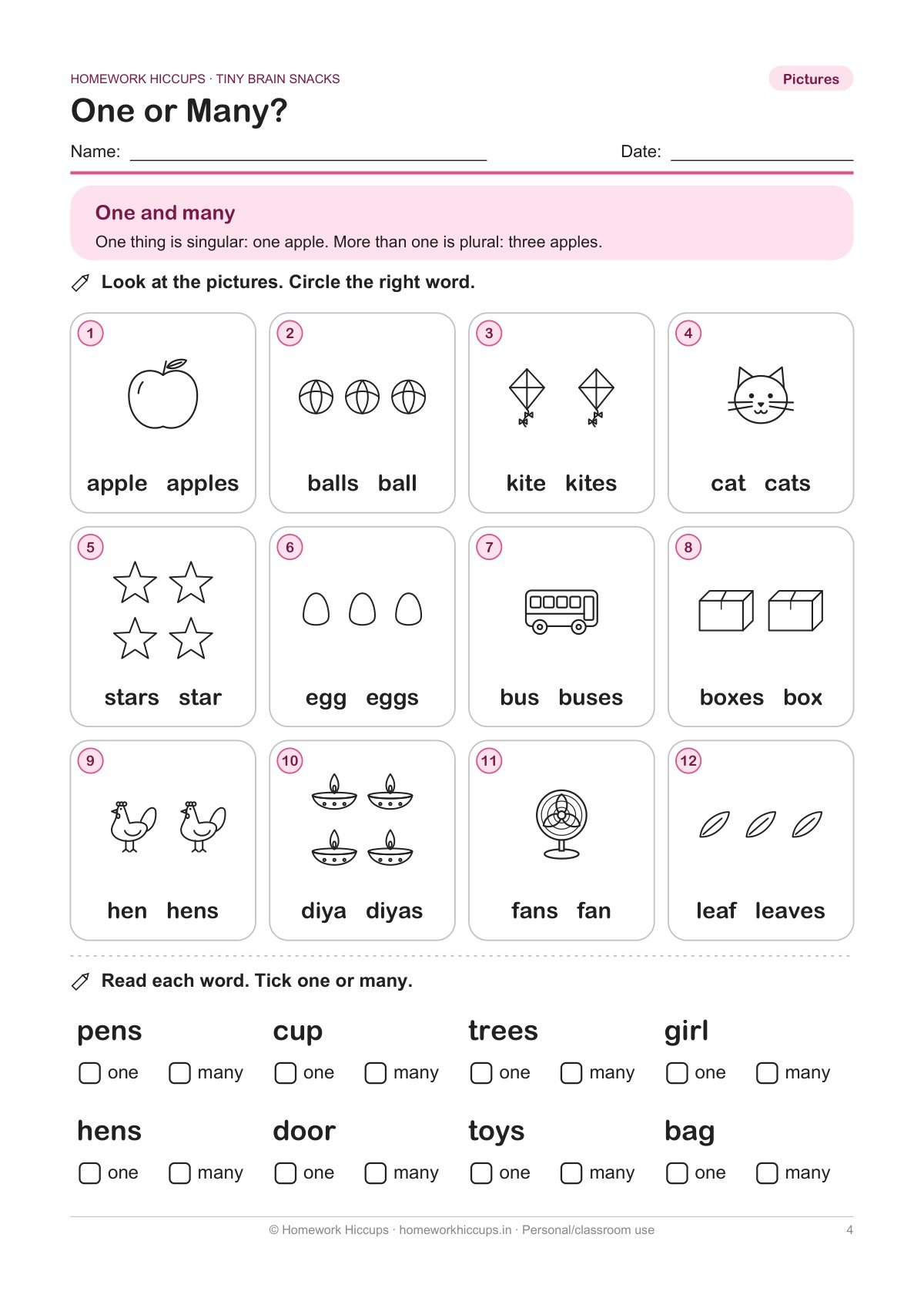
Worksheets have a place, but a small one. For LKG and UKG, one short page a day (3 to 5 minutes) after hands-on practice is plenty. Do it in class where you can see the grip and starting points. Avoid sending home heavy written homework; a sound hunt or counting task at home is more useful.
13. Tell stories every day
A five-minute story with expressive voices, picture cards and a few questions builds vocabulary and listening better than almost anything else. Let children predict what happens next and retell the story with puppets.
14. Assess by observation
Young children often freeze in formal tests. Instead, keep a simple class checklist and tick skills when you see them during normal activities: recognises letters, counts to 20, holds a pencil correctly, follows two-step instructions. Add a short note or two per child each week.
15. Partner with parents
Send a short weekly note or message: what we learned, one song to sing at home and one small activity. Keep it positive and practical. At parent meetings, show real work and your observation notes, not just marks.
Kindergarten teaching tips: LKG versus UKG
| Area | How to teach LKG students | How to teach UKG students |
|---|---|---|
| Letters | Sounds and capital letters, tracing big shapes | Small letters, blending simple CVC words |
| Numbers | Counting objects, recognising numbers to 20 | Numbers beyond 20, before and after, simple adding |
| Writing | Lines, curves, tracing with start dots | Writing letters and short words on four lines |
| Activity length | About 5 to 7 minutes | About 8 to 10 minutes |
| Independence | Lots of adult support and modelling | More small group and independent work |
Exact content varies by school and board. For typical topic lists, see our LKG syllabus and UKG syllabus guides.
Prefer ready-to-print pages?
LKG Worksheets PDF – Tiny Brain Snacks Starter Pack (46 Pages) – A4 PDF, instant download. ₹149 ₹299
Common mistakes new pre-primary teachers make
- Planning too much content. One new letter and one number idea per day is enough.
- Talking for too long. If you have spoken for more than 3 minutes without children doing something, switch.
- Too much copying. Pages of repeated letters tire small hands and do not teach much more than a few careful rows.
- Comparing children aloud. Children develop at different rates; compare each child with their own past work.
- Skipping celebrations. Festivals and special days are great for themed lessons; our Children’s Day lesson plan is an example of how to plan one.
Ready-made material for the LKG classroom
If you would like print-ready practice pages to use after hands-on teaching, our LKG Worksheets PDF Starter Pack (46 A4 pages) covers capital and small letters A to Z on four-line guides with stroke order, numbers 1 to 20 tracing, count and write, ten-frames, before and after numbers, shapes, patterns, big and small, and mazes, with answer keys, a 4-week tracker and a certificate. The licence covers personal or single-classroom use, so you can print pages for your own class.
Get the LKG Starter Pack – ₹149
Want to check the style first? Try a free sample first: a 6-page LKG sample with real pages from the pack. You can also browse LKG worksheets and UKG worksheets.
🧸 Learning toys kids love
As an Amazon Associate, Homework Hiccups earns from qualifying purchases, at no extra cost to you.
Want everything for Nursery to Class 2?
Complete Worksheet Library – All 20 Packs for Ages 3–8 (790+ Pages): all 20 printable packs, 790+ A4 pages of English, maths, Hindi, EVS and festival activities. ₹699 ₹2130
Frequently asked questions
How do you teach LKG students effectively?
Keep activities short, about 5 to 7 minutes each, and teach through play, songs, movement and real objects. Use a predictable daily routine and simple attention signals, and keep written work to one short page a day.
How long should an activity be for UKG students?
Most UKG children can focus on one adult-led activity for about 8 to 10 minutes. Change the activity or add movement after that, even within a single period.
How do you manage a large kindergarten class?
Use attention signals, classroom monitors, a fixed routine and small group rotations. Praise specific good behaviour and add short movement breaks every 10 minutes or so.
Should LKG and UKG children get homework?
Many educators recommend little or no written homework at this age. A short practical task such as finding objects that start with a sound or counting things at home is usually more useful. Follow your school policy.
How should pre-primary teachers assess children?
Assess mainly by observation during normal activities, using a simple skills checklist and short weekly notes for each child. Formal written tests are rarely needed at this stage.