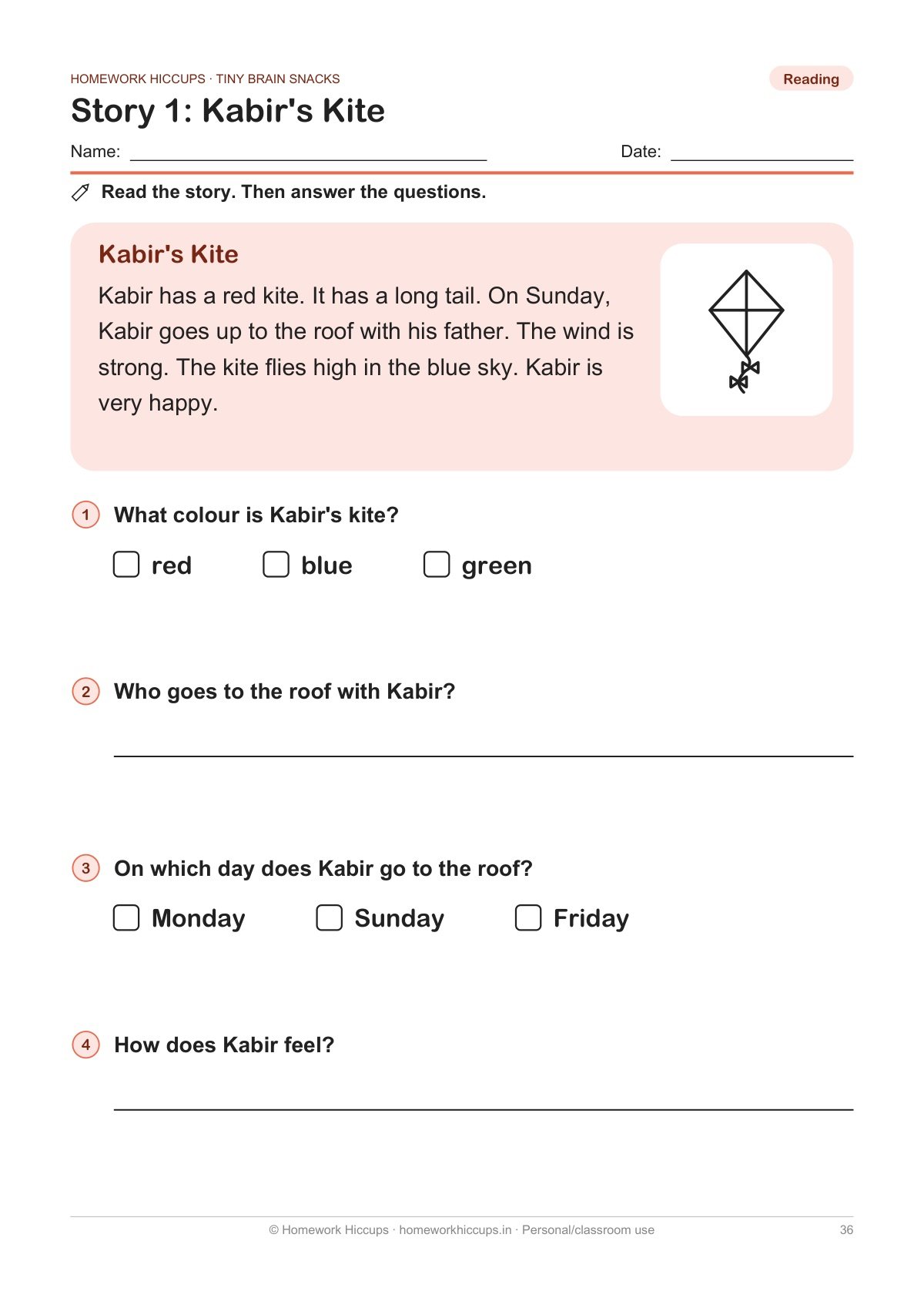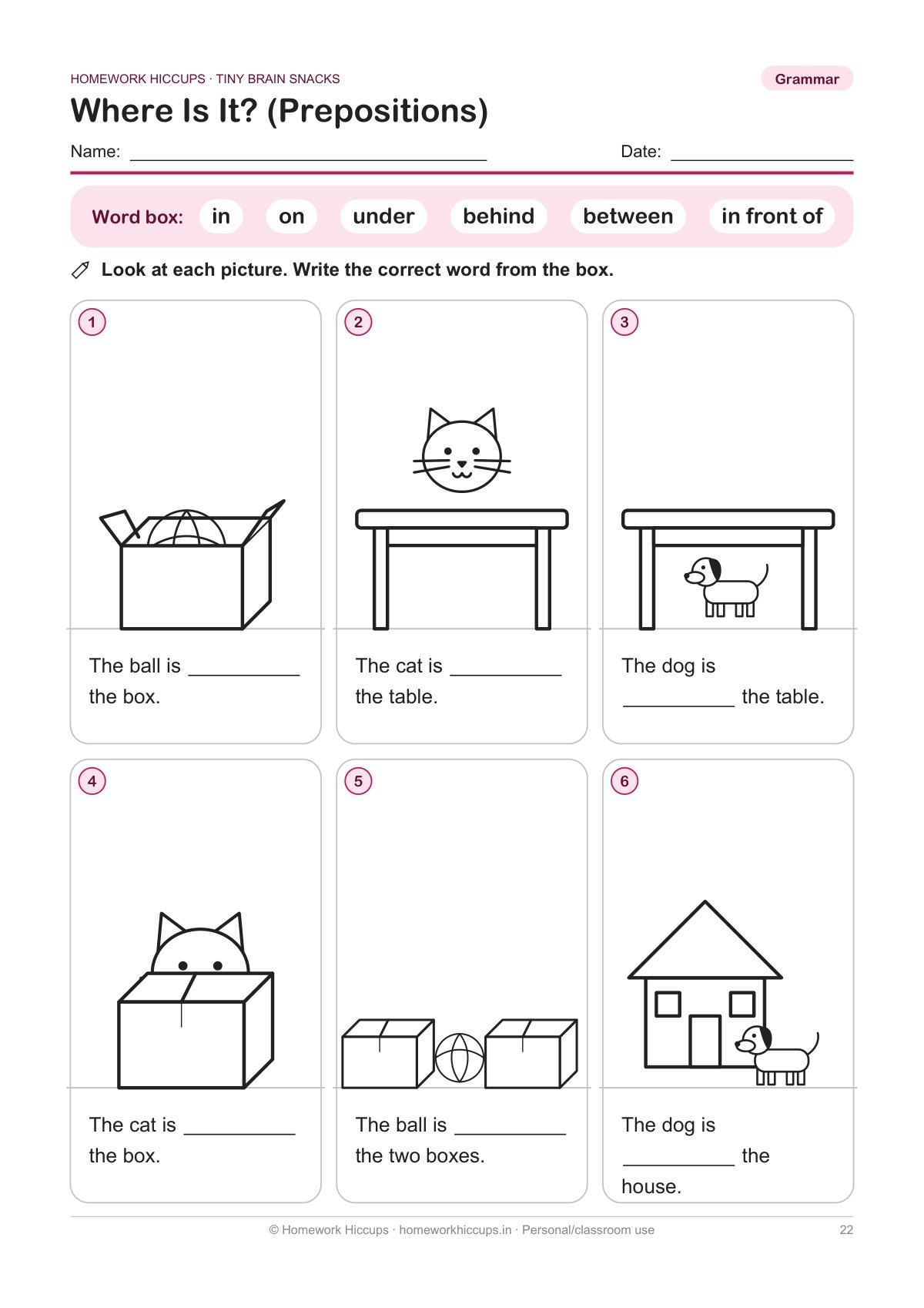
Children’s Day falls on 14 November, and in most Indian schools it is a happy, slightly chaotic day of games, songs and treats. For teachers of Kindergarten to Class 2, the trick is to give the day some shape. A simple lesson plan means children still learn something about why we celebrate, every child gets a turn, and you are not left wondering what to do with the last twenty minutes before the bell.
Print-ready worksheets for this topic
Children's Day Worksheets for Kids PDF – Colouring, Puzzles, Kindness & Certificates, Ages 4–8 (23 Pages) – A4 PDF, instant download. ₹49 ₹99
This guide gives you a ready-made Children’s Day lesson plan for kindergarten and another for Class 1–2, both for a 40-minute period. You will also find ten simple games (many of them traditional Indian ones), a list of good topics for speeches, assembly and drawing, and a clear note on how World Children’s Day differs from Children’s Day in India.
Quick answer: A good Children’s Day lesson plan for a 40-minute period has four parts:
- Warm-up (5–8 min): a song, a rose or a photo of Pandit Nehru, and the question “Why is today special?”
- Story or talk (5–10 min): 14 November is the birthday of Pandit Jawaharlal Nehru, India’s first Prime Minister, who loved children.
- Main activity (15–20 min): a drawing, writing or group game linked to friendship, play or dreams.
- Wrap-up (5 min): share, praise every child, and hand out a certificate or sticker.
Before you plan: the key facts in child-friendly words
Children’s Day in India, also called Bal Diwas, is celebrated on 14 November. It is the birthday of Pandit Jawaharlal Nehru, who was born in 1889 and became India’s first Prime Minister. He loved spending time with children and believed they were the future of the country. Children lovingly called him Chacha Nehru, and he often wore a rose on his coat.
For kindergarten, you can say: “Today is a special day just for you! A long time ago, there was a kind leader called Chacha Nehru. He loved children very much. His birthday was on 14 November, so every year on his birthday, we celebrate all the children of India.”
That is all the history small children need. The rest of the day should be about play, friendship and feeling valued.
Children’s Day lesson plan for kindergarten (40 minutes)
This plan suits Nursery, LKG and UKG. It keeps children moving, uses very little writing, and ends with every child getting a moment of praise.
| Part | Time | What to do |
|---|---|---|
| Objective | – | Children can say that 14 November is Children’s Day, name one game they love, and share something with a friend. |
| Warm-up | 8 min | Sing a favourite action song. Show a real or paper rose and ask, “Who wore a rose like this?” Tell the short Chacha Nehru story above. |
| Main activity | 20 min | “My Favourite Game” circle: each child names or acts out a game they love (5 min). Then children colour a kite or balloon page and give it to a friend as a gift (15 min). |
| Wrap-up | 7 min | Children sit in a circle. The teacher says one kind thing about each child. End with “Happy Children’s Day!” together and a sticker or star. |
| Materials | – | A rose (real or paper), colouring pages, fat crayons, stickers or small paper stars. |
Teacher tips for kindergarten: keep each activity under ten minutes, give clear one-step instructions, and let shy children act out their favourite game instead of speaking. If you have a large class, split the praise circle into two groups with a helper.
Children’s Day lesson plan for Class 1 and Class 2 (40 minutes)
Older children can read a little, write a sentence or two and work in small groups. This plan uses the theme “My Dreams”.
| Part | Time | What to do |
|---|---|---|
| Objective | – | Children can explain why Children’s Day is celebrated, write one sentence about their dream, and listen to their classmates. |
| Warm-up | 5 min | Write “14 November” on the board. Ask, “Whose birthday is it today?” Share three quick facts: Pandit Nehru, first Prime Minister, loved children. |
| Talk | 5 min | Ask, “What do you want to be when you grow up?” Write children’s answers on the board as a word bank (doctor, pilot, teacher, cricketer, artist). |
| Main activity | 20 min | Children draw themselves doing their dream job and write: “When I grow up, I want to be a ____ because ____.” Fast finishers decorate a border of stars. |
| Wrap-up | 10 min | Gallery walk: drawings go on desks, children walk around and say one nice thing about a friend’s dream. Pin all pages on a “Our Dreams” wall. |
| Materials | – | A4 sheets, pencils, crayons, a chart paper title for the wall, tape or pins. |
Variation: swap the theme for “A Good Friend”. Children write three words that describe a good friend, then make a compliment card for the child sitting next to them. This works well if you want to focus on kindness and classroom bonding.
What activities can be done on Children’s Day in school?
Beyond the lesson plan, most schools organise a mix of fun events across the day. Here is a simple way to spread them out so children do not get overtired:
- Morning assembly: a short talk about Pandit Nehru, a song by the teachers, and two or three children saying a few lines.
- First period: the 40-minute lesson plan above.
- Before break: a games period in the playground (see the games list below).
- After break: a calm activity such as worksheets, colouring or a story read aloud by a teacher.
- Last period: a class party, a certificate for every child and a group photo.
For a longer list of crafts, card ideas and home activities, see our guide to Children’s Day activities for kids.
What are some fun games I can play with children on Children’s Day?
Games are the highlight of the day for most children. These ten need very little equipment and work for mixed groups. Several are traditional Indian games that many parents and grandparents played too, which is a lovely talking point.
1. Kho-kho (simplified)
Children sit in a line, facing alternate directions. One child is the chaser, one is the runner. The chaser can tag a seated child by touching their back and saying “Kho!”, and that child becomes the new chaser. For kindergarten, play in a small group of eight with a short line and no time limit.
2. Stapu (hopscotch)
Draw a hopscotch grid with chalk, numbered 1 to 8. Children throw a small stone into a box, then hop through the grid, skipping that box. Great for balance and number recognition.
3. Lemon and spoon race
Each child holds a spoon with a lemon (or a small ball) in it and walks to the finish line without dropping it. For little ones, let them use two hands and walk slowly. Everyone who finishes gets a clap.
4. Musical chairs, kind version
Play music while children walk around a circle of chairs. When the music stops, they sit. Instead of sending children out, remove a chair and let children share seats or sit on a friend’s lap. The game ends with everyone giggling on a few chairs.
5. Pithoo (seven stones), soft version
Stack seven flat stones or plastic cups. One team tries to knock the pile down with a soft ball, then rebuild it before the other team gently tags them with the ball. Use a very soft ball and keep it below the waist for small children.
6. Chain catch (chain-chain)
One child is “it”. When they catch someone, the two hold hands and keep chasing together. The chain grows until everyone is caught. Play in a marked area so the chain does not run into walls.
7. Pass the parcel
Wrap a small gift in several layers of newspaper, with a fun task inside each layer (“Sing a line of a song”, “Hop five times”). Pass the parcel while music plays. When it stops, the child holding it opens a layer and does the task.
8. Statue (freeze dance)
Children dance to music and freeze like statues when it stops. Anyone who moves can do a funny pose for the class instead of being out. Easy for even the youngest children.
9. Dog and the bone
Two teams stand facing each other with a “bone” (a duster or soft toy) in the middle. Each child has a number. When the teacher calls a number, the two children with that number run to grab the bone and get back to their team without being tagged.
10. Yarn friendship web
Children sit in a circle. The first child holds the end of a ball of wool, says one kind thing about a classmate and rolls the ball to them. By the end, the class has made a web that connects everyone. A calm, meaningful way to end the games period.
Safety note: mark boundaries clearly, keep running games on soft ground where possible, and have water ready. With younger children, focus on taking part rather than winning.
Prefer ready-to-print pages?
Children's Day Worksheets for Kids PDF – Colouring, Puzzles, Kindness & Certificates, Ages 4–8 (23 Pages) – A4 PDF, instant download. ₹49 ₹99
What are some good topics for Children’s Day?
Teachers often need topics for a short speech, a morning assembly, a class discussion or a drawing competition. Here are twelve that work well for Kindergarten to Class 2:
| Topic | Best used for | Age group |
|---|---|---|
| Why we celebrate Children’s Day | Speech, assembly | UKG – Class 2 |
| Chacha Nehru and his love for children | Speech, story time | UKG – Class 2 |
| My dream: when I grow up | Drawing, writing | LKG – Class 2 |
| My best friend | Drawing, discussion | Nursery – Class 2 |
| My favourite game | Show-and-tell, drawing | Nursery – Class 2 |
| What makes me happy | Discussion, drawing | Nursery – Class 1 |
| How to be a kind friend | Discussion, assembly | LKG – Class 2 |
| Every child has the right to play and learn | Assembly, discussion | Class 1 – Class 2 |
| My school, my second home | Speech, drawing | UKG – Class 2 |
| Games our grandparents played | Discussion, home project | Class 1 – Class 2 |
| Sharing is caring | Story, role play | Nursery – UKG |
| A world where every child smiles | Drawing competition | UKG – Class 2 |
A short Children’s Day speech for UKG and Class 1
Good morning to everyone. Today is 14 November. It is Children’s Day. We celebrate it on the birthday of Pandit Jawaharlal Nehru. He was the first Prime Minister of India. He loved children, and we call him Chacha Nehru. Let us be kind, play together and work hard. Happy Children’s Day!
Let children practise at home a few times and hold a small card with key words if they feel nervous.
Children’s Day activities for kindergarten: extra tips
Kindergarten children enjoy the day most when it feels familiar and safe. A few things that help:
- Keep the routine. Start with your usual circle time, then add the special activities.
- Short bursts. Three-year-olds manage about five to ten minutes on one activity.
- Hands-on first. Colouring, sticking, dancing and simple games work better than listening to long talks.
- Everyone wins. Give a sticker, a star or a certificate to every child, not just the winners.
- Send something home. A coloured page or a small card helps children tell their families about the day.
World Children’s Day vs Children’s Day in India
Children and parents often get confused because there are two Children’s Days in November.
- Children’s Day in India (Bal Diwas): 14 November, the birthday of Pandit Jawaharlal Nehru, born in 1889.
- World Children’s Day: 20 November, led by the United Nations and UNICEF. It marks the adoption of the Declaration of the Rights of the Child in 1959 and the Convention on the Rights of the Child in 1989. The focus is on every child’s right to things like health, education, safety and play.
What is the theme for World Children’s Day in 2026?
UNICEF chooses the focus for World Children’s Day each year. At the time of writing (October 2026), UNICEF’s official World Children’s Day 2026 campaign page uses the line “My day. My rights. My future.” and asks children to tell world leaders what kind of future they want. UNICEF sometimes adds to or updates its campaign closer to 20 November, so check the World Children’s Day page on UNICEF’s official website before your assembly. Be careful with other websites that list older themes as if they were current.
For a Class 1 or 2 discussion, you can turn this into a simple question: “What kind of world do you want when you grow up?” Children can draw their answer, which links neatly to the “My Dreams” lesson plan above.
Ready-to-print Children’s Day worksheets
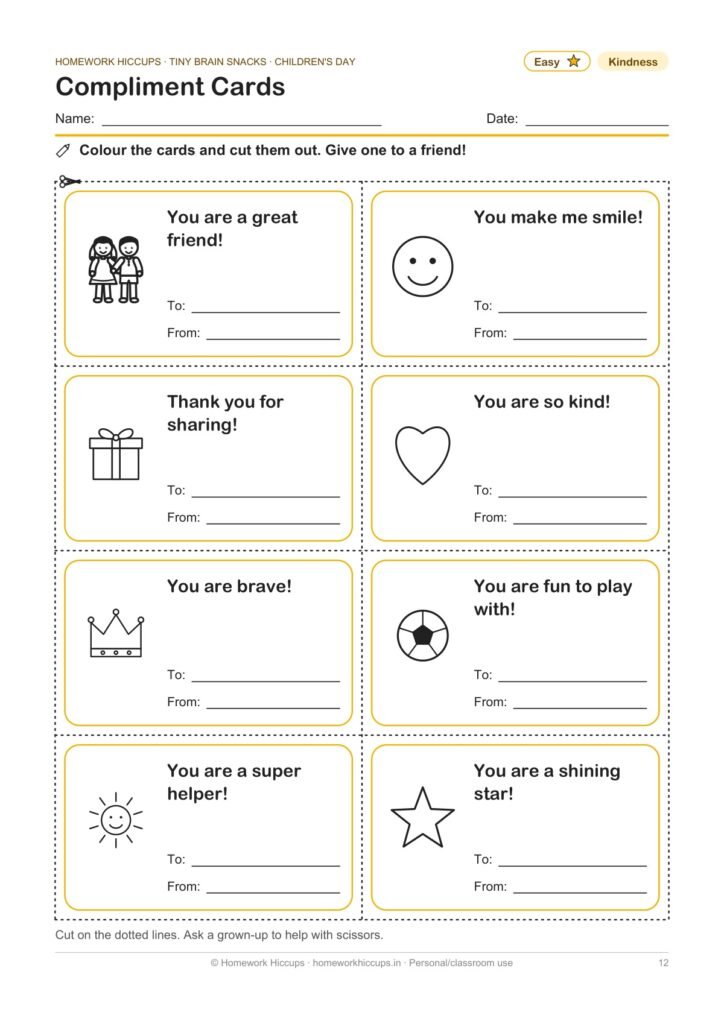
If you want printable pages to go with your lesson plan, our Children’s Day Activity Pack PDF (₹49, 23 A4 pages, ages 4 to 8) was made with teachers in mind. It includes a parent and teacher page with simple facts about Children’s Day and Pandit Nehru, classroom ideas and a one-day plan. There are All About Me and My Dreams pages, 4 colouring pages, tracing words, a favourite games tick-list with 12 games (including cricket, kho-kho, stapu, carrom and kanche), a friendship web with a class yarn-web game, 8 compliment cards, counting and adding balloons, a maze, spot the difference, a word search, a fold-and-colour card, answer keys, a “Superstar Child” certificate and a blank class certificate you can fill in for each child.
The licence covers your own classroom, so you can print as many copies as your class needs.
Get the Children’s Day Activity Pack – ₹49
If you teach several classes or want worksheets for the whole year, the Complete Worksheet Library Bundle includes all 20 packs (790+ pages) for ₹699. You can also browse our festival packs, LKG worksheets, UKG worksheets and Class 1 worksheets. Planning ahead? Our Christmas activities for preschoolers and Republic Day activities are ready when you are.
See the Complete Worksheet Library – ₹699
Frequently asked questions
What activities can be done on Children’s Day in school?
Schools can hold a short assembly about Pandit Nehru, a 40-minute lesson on a theme like My Dreams or A Good Friend, a games period with kho-kho, stapu and lemon and spoon races, a calm colouring or story session, and a class party where every child gets a certificate.
What are some fun games I can play with children on Children’s Day?
Fun games include simplified kho-kho, stapu (hopscotch), lemon and spoon race, a kind version of musical chairs, soft pithoo, chain catch, pass the parcel, statue, dog and the bone, and a yarn friendship web. Most need only chalk, music or a ball.
What are some good topics for Children’s Day?
Good topics include why we celebrate Children’s Day, Chacha Nehru and his love for children, my dream when I grow up, my best friend, my favourite game, how to be a kind friend, sharing is caring, and every child has the right to play and learn.
What Children’s Day activities are best for kindergarten?
For kindergarten, choose short, hands-on activities: an action song, a simple Chacha Nehru story, a favourite game circle, colouring a kite or balloon page to give a friend, statue dance and a praise circle where every child gets a sticker or star.
What is the theme for World Children’s Day in 2026?
World Children’s Day is on 20 November. At the time of writing in October 2026, UNICEF’s official World Children’s Day 2026 campaign page uses the line My day. My rights. My future. Check UNICEF’s official website closer to the date in case the campaign is updated.