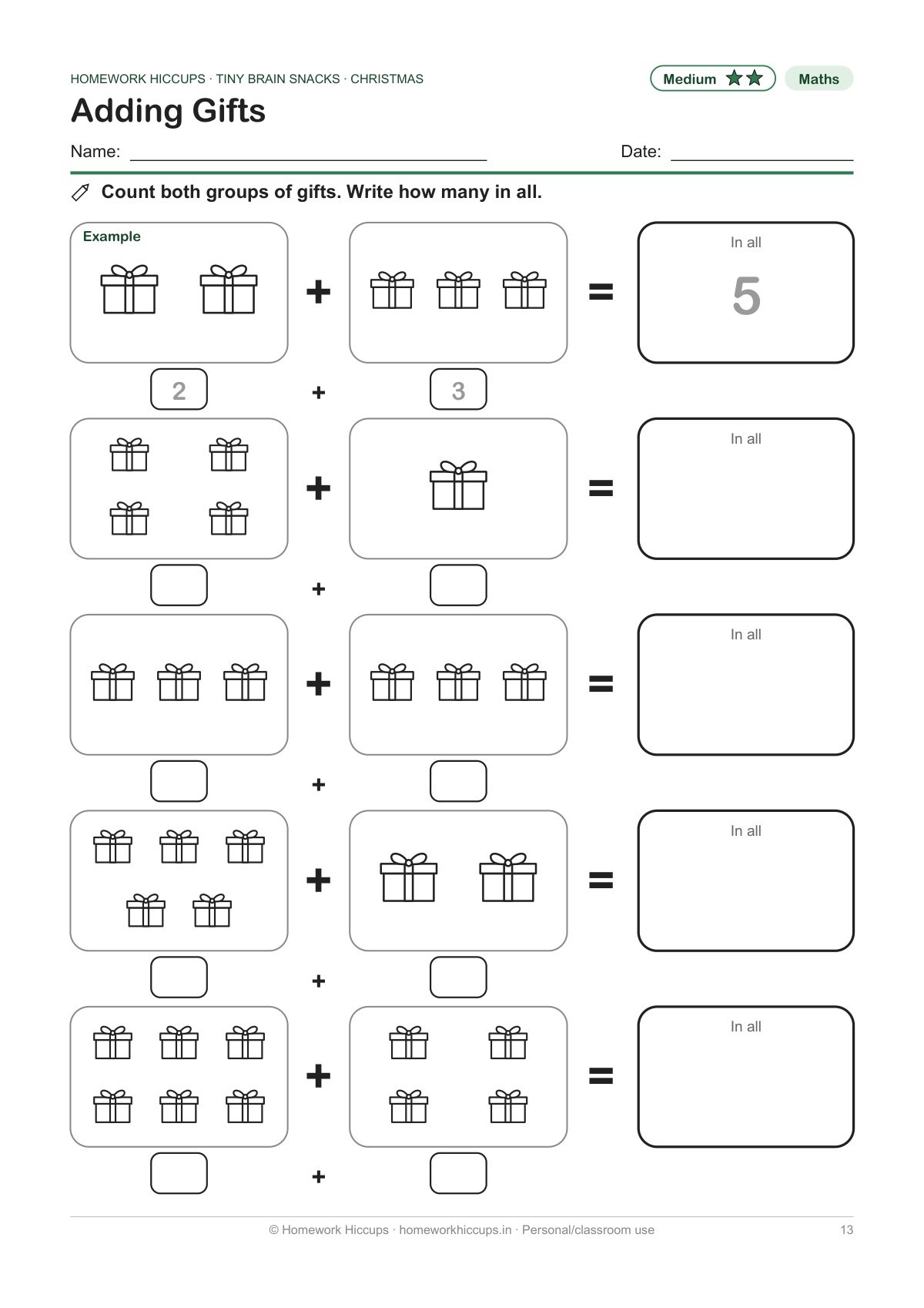
If your child has just started playgroup or pre-nursery, you have probably wondered whether you should be doing playgroup worksheets at home. Friends share PDFs, schools send home colouring sheets, and it is easy to feel you are already behind. The honest answer is reassuring: at two and a half to three, most learning happens through hands, play and talk, and paper is only a small part of it.
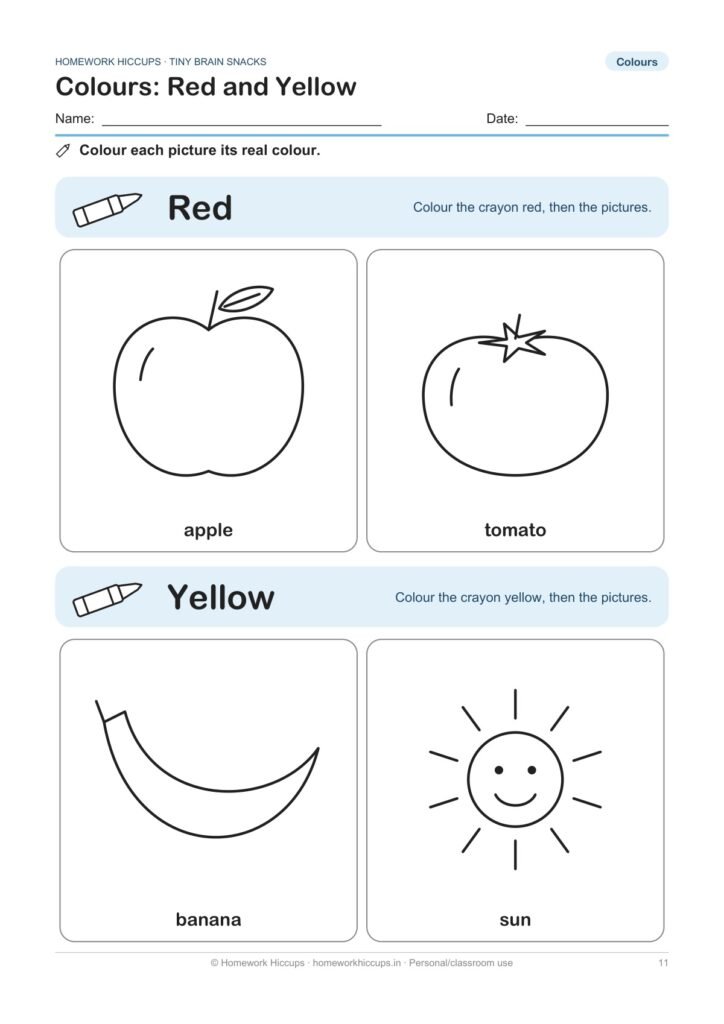
Print-ready worksheets for this topic
Nursery Worksheets PDF for Ages 3–4 – Pre-Writing, Colours, Shapes, A–Z & 1–10 (46 Pages) – A4 PDF, instant download. ₹149 ₹299
This guide explains what a 2.5–3-year-old can really do, the signs that your child is ready for a first worksheet, what to do before paper, 20 screen-free activities using things you already have at home, and which simple worksheet types suit this age when the time comes.
🧰 Make practice more fun at home
 A4 printing paperBright 75–80 GSM sheets so worksheets print crisp.See on Amazon →
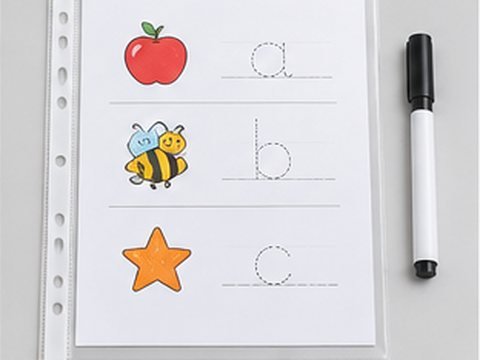 Wipe-clean sheet protectorsSlip a page in, write, wipe and reuse.See on Amazon →
 Abacus for kidsBead counting makes sums visible and fun.See on Amazon →
 Magnetic numbers boardBuild sums on the fridge or a magnetic board.See on Amazon →
As an Amazon Associate, Homework Hiccups earns from qualifying purchases, at no extra cost to you.
Quick answer: Playgroup worksheets are fine in small doses if:
- Your child can hold a fat crayon and enjoys scribbling.
- They can sit with you for about 3–5 minutes.
- The page has big pictures, thick lines and almost no text.
- Most of the day is still hands-on play: play dough, sorting, stacking, songs and stories.
- Best first pages: colouring big shapes, big dots, follow-the-path and standing lines.
Are playgroup worksheets right for a 2.5–3-year-old?
Children at this age are building the muscles in their hands and shoulders, learning to sit still for short spells, and picking up huge numbers of new words. A worksheet can support this, but only if it is short and playful. If your child pushes the page away, there is no harm in stopping and trying again in a few weeks.
Readiness checklist
| Sign | What it looks like | If not yet, try |
|---|---|---|
| Holds a crayon | Grasps a chunky crayon in a fist or with fingers and makes marks | Play dough, tearing paper, picking up big pom-poms |
| Sits for a short time | Stays at a table for 3–5 minutes with you | Short story time, puzzles with 2–4 pieces |
| Copies a line | Tries to copy an up-down line after watching you | Draw lines in sand, flour or on a steamy mirror |
| Names some colours or pictures | Points to a ball, apple or dog when asked | Picture books and “Where is the…?” games |
| Shows interest | Wants to “do work” like an older sibling | Let them scribble on scrap paper beside you |
For the next stage, our guide to worksheets for 3-year-olds explains how pages can grow as your child does.
What to do before paper
Pre-nursery worksheets work much better when children have already practised the same movements with their whole hand and body. Spend a few weeks on these first:
- Squeeze and roll: atta dough or play dough snakes, balls and pancakes build finger strength.
- Pinch and pick: moving big pasta or rajma from one bowl to another (always supervised, as small items can be swallowed).
- Big scribbles: chalk on the floor or crayon on newspaper taped to the wall, standing up.
- Tear and stick: tearing old magazine pages and sticking the bits on a drawn shape.
Our post on fine motor activities for preschoolers has many more ideas for strengthening little hands.
20 playgroup activities at home (no screens)
These activities for 2 year olds and young threes need no printing. Do one or two a day, for as long as your child is enjoying it.
Hands and fingers
- Dough snakes: roll long snakes, then cut them with a blunt plastic knife.
- Clothes-peg clips: clip pegs around the edge of a paper plate or box.
- Sticker lines: peel stickers and press them along a line you have drawn.
- Water pouring: pour water between two steel cups at the sink or outdoors.
- Spoon transfer: move dry chana from one bowl to another with a spoon.
Sorting and matching
- Colour sort: put red, yellow and green blocks or caps into matching bowls.
- Big and small: sort spoons, shoes or balls into big and small.
- Sock match: find the pairs in a pile of clean socks.
- Fruit basket: separate bananas, apples and oranges and name each.
- Shape hunt: find round things (plate, roti, clock) around the house.
Words and talking
- Picture book talk: ask “What is this? What is he doing?”
- Feely bag: put a spoon, ball or toy car in a cloth bag; your child feels and guesses.
- Action rhymes: clap, stamp and wave to songs your family knows.
- Kitchen names: name each vegetable while you cook: aloo, tamatar, gajar.
- Phone call play: pretend to call Nani and tell her about the day.
Movement and early maths
- Follow the tape: walk along a straight or zigzag line of tape on the floor.
- Count the steps: count aloud, one to five, as you climb stairs.
- Stack and topple: build a tower of steel bowls or blocks and count them.
- Ball roll: roll a ball back and forth, saying “to you, to me”.
- Puddle jumps: draw circles with chalk and jump into each one.
Looking for more? See activities for kids without screens.
Which first worksheets suit playgroup kids?
When your child is ready, choose pages that copy the movements above. Avoid letter and number writing for now; tracing letters needs control most children build later in Nursery.
| Worksheet type | Why it suits playgroup | Tip |
|---|---|---|
| Big-picture colouring | Builds grip and colour names | Accept colouring outside the lines |
| Dot art (big circles) | One dot per circle builds aim | Use a cotton bud dipped in paint or a dot marker |
| Follow the path | Finger first, then crayon | Trace the path with a toy car before drawing |
| Standing and sleeping lines | Simplest pre-writing strokes | Talk about rain falling down, a car driving across |
| Match the same | Visual matching, no writing | Point and say, then draw the line together |
How to run a 3-minute worksheet session
- Sit beside your child, not across the table.
- Give one chunky crayon, not a whole box.
- Show the movement once in the air, then on the page.
- Praise the effort: “You made the rain fall all the way down!”
- Stop while they are still happy, even if the page is half done.
Prefer ready-to-print pages?
Nursery Worksheets PDF for Ages 3–4 – Pre-Writing, Colours, Shapes, A–Z & 1–10 (46 Pages) – A4 PDF, instant download. ₹149 ₹299
Playgroup worksheets PDF: the gentle next step
Our Nursery Worksheets PDF is designed for ages 3–4 (Nursery, Pre-KG and Playgroup), so it is best for older playgroup children who are nearly three or just past it. It has 46 A4 pages with big pictures, thick dotted lines and very little text. For a playgroup child, start with the 8 pre-writing pages (standing lines as rain from clouds, sleeping lines to drive the car home, slanting lines, curves, zigzags, waves, circles and a follow-the-path page), the 3 colour pages, the 2 dot art pages and the matching pages. Keep the A–Z letter and 1–10 number pages for later, at your child’s pace. It also includes a parent page with crayon grip tips, an answer key, a 4-week star tracker and a Nursery Star certificate.
Get the Nursery Worksheets Pack – ₹149
Not sure yet? The free nursery worksheets sample has a cover, 3 real pages and a contents page. You get it by entering your name and email at checkout, with no payment. A handy tip: slip a page into a plastic sleeve and use a dry-erase marker, so your child can trace the same lines again and again.
What not to worry about at this age
- Colouring inside the lines. Big, happy scribbles are the goal.
- Holding the crayon “correctly”. A fist grip is common at first; short, chunky crayons encourage fingers naturally.
- Writing letters or their name. Recognising letters on signs and books is plenty for now.
- Comparing with other children. Children of the same age can be months apart in fine-motor skill, and that is normal.
Curious what comes next? Our nursery syllabus guide shows what many schools cover in the following year, and you can browse all nursery worksheets.
Get the Nursery Worksheets Pack – ₹149
🧸 Learning toys kids love
 Maths board gamePractise numbers while playing as a family.See on Amazon →
 Building blocksOpen-ended play that builds counting and creativity.See on Amazon →
 Jigsaw puzzles (3–6 yrs)Screen-free focus time for little ones.See on Amazon →
 Educational board gamesFamily game time that sneaks in learning.See on Amazon →
As an Amazon Associate, Homework Hiccups earns from qualifying purchases, at no extra cost to you.
Frequently asked questions
Should a 2.5-year-old do worksheets?
Only if they enjoy it, and only for 3 to 5 minutes. At this age most learning comes from play, so keep worksheets to simple colouring, big dots and follow-the-path pages, and spend most of the time on hands-on activities.
What should playgroup kids learn at home?
Focus on talking, listening to stories, naming colours and everyday objects, sorting, counting aloud to five, and building hand strength with dough, pegs and scribbling. There is no need to teach letter writing yet.
What is the difference between playgroup and pre-nursery?
Schools use the names differently. Both usually refer to the year before Nursery, for children of about two to three, and focus on play, routines and social skills rather than written work.
How long should a toddler sit for an activity?
Many two and three year olds can focus for a few minutes at a time. Stop while your child is still happy, and try again later rather than pushing them to finish.
Is the nursery pack suitable for playgroup?
It is designed for ages 3 to 4. Older playgroup children can start with its pre-writing lines, colour pages, dot art and matching pages, and move to the letter and number pages later.