Your child is about to start Nursery, or you are filling in admission forms, and everyone seems to have a different idea of what a three-year-old “should” know. One school talks about A–Z, another about play-based learning, and a relative insists their grandchild could write numbers to 50 at this age. Take a breath. This guide explains what children typically learn in Nursery in India, what the national framework actually recommends, and how to support your child at home without turning their days into homework.

Print-ready worksheets for this topic
Nursery Worksheets PDF for Ages 3–4 – Pre-Writing, Colours, Shapes, A–Z & 1–10 (46 Pages) – A4 PDF, instant download. ₹149 ₹299
First, the honest bit: there is no single official nursery syllabus in India. CBSE, ICSE and state boards set curricula for school classes, but Nursery (also called Pre-KG, Pre-Nursery in some places, or Balvatika 1 under the new structure) is planned by each school or preschool. What does exist is national guidance: the National Curriculum Framework for Foundational Stage (NCF-FS) 2022, which describes learning goals for children aged three to eight.
🧰 Make practice more fun at home
As an Amazon Associate, Homework Hiccups earns from qualifying purchases, at no extra cost to you.
Quick answer: A typical Nursery syllabus for ages 3–4 includes:
- English: listening, rhymes, stories, pre-writing lines (standing, sleeping, slanting, curves), and recognising some letters.
- Maths: counting 1–10 (some schools go further), colours, basic shapes, big/small, matching and sorting.
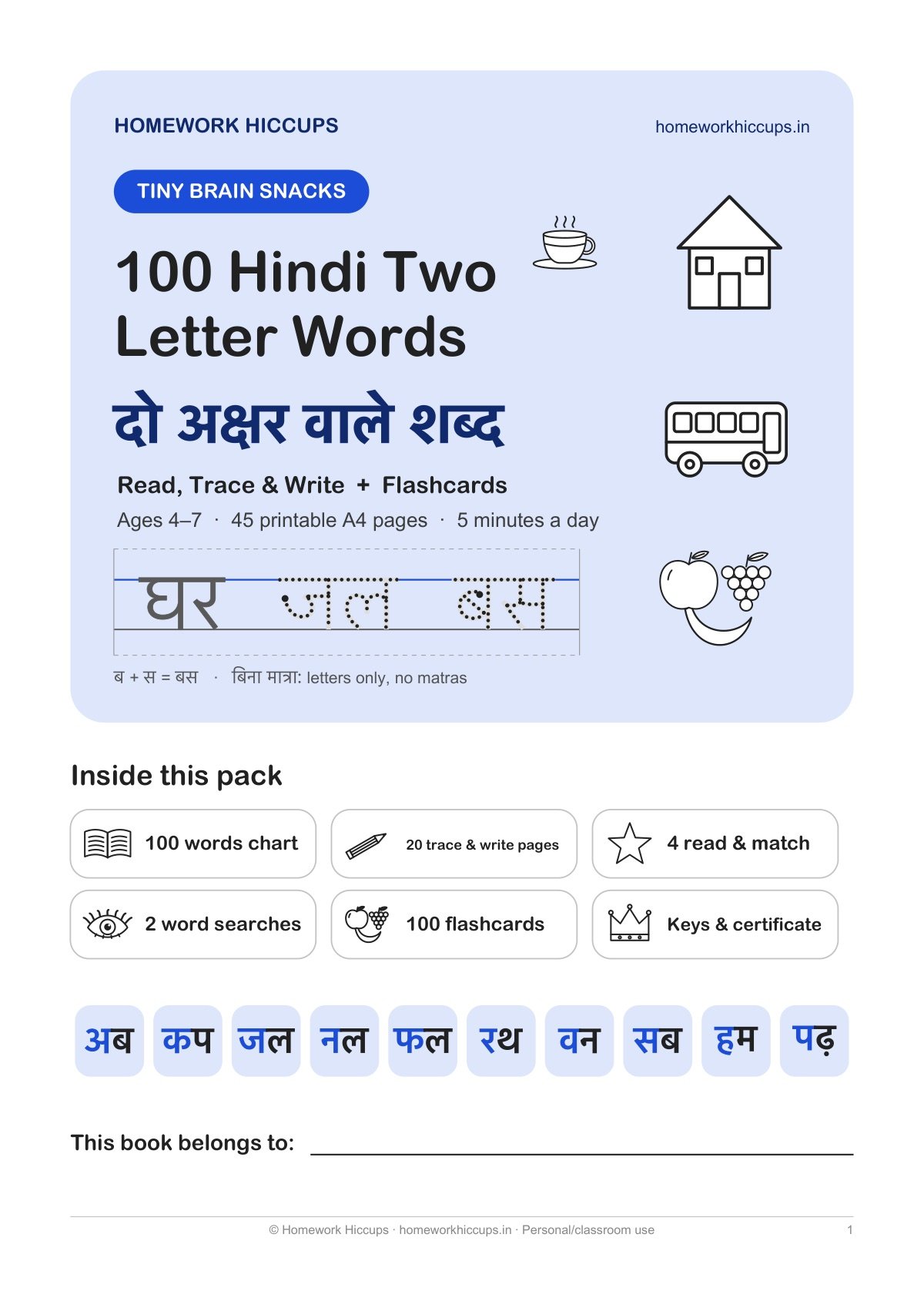
- Hindi / regional language: rhymes, songs and, in some schools, a few swar like अ, आ.
- EVS: myself, family, body parts, fruits, animals, good habits.
- Underneath it all: fine motor skills, social skills, independence and lots of play.
Nursery age and what NCF-FS 2022 says
Under the National Education Policy 2020, the years from three to eight are called the foundational stage. It covers three years of preschool (often called Balvatika 1, 2 and 3, roughly matching Nursery, LKG and UKG) followed by Classes 1 and 2. Nursery children are usually around three to four years old, but the exact age cut-off depends on your state and school, so always check the admission notice.
NCF-FS 2022, released by the Ministry of Education and NCERT, organises learning goals into broad areas of development rather than subjects:
- Physical development (including fine and gross motor skills)
- Socio-emotional and ethical development
- Cognitive development (thinking, early maths, understanding the world)
- Language and literacy development
- Aesthetic and cultural development (art, music, movement)
- Positive learning habits
The framework strongly emphasises play, conversation, stories, songs and hands-on activities for this age, and it does not envisage textbooks for children aged three to six. That does not mean “nothing is learnt” in Nursery — children learn a great deal — but it does mean heavy written homework is not what the national guidance has in mind.
Nursery English syllabus
English in Nursery is mostly about listening and speaking, with the first steps towards writing.
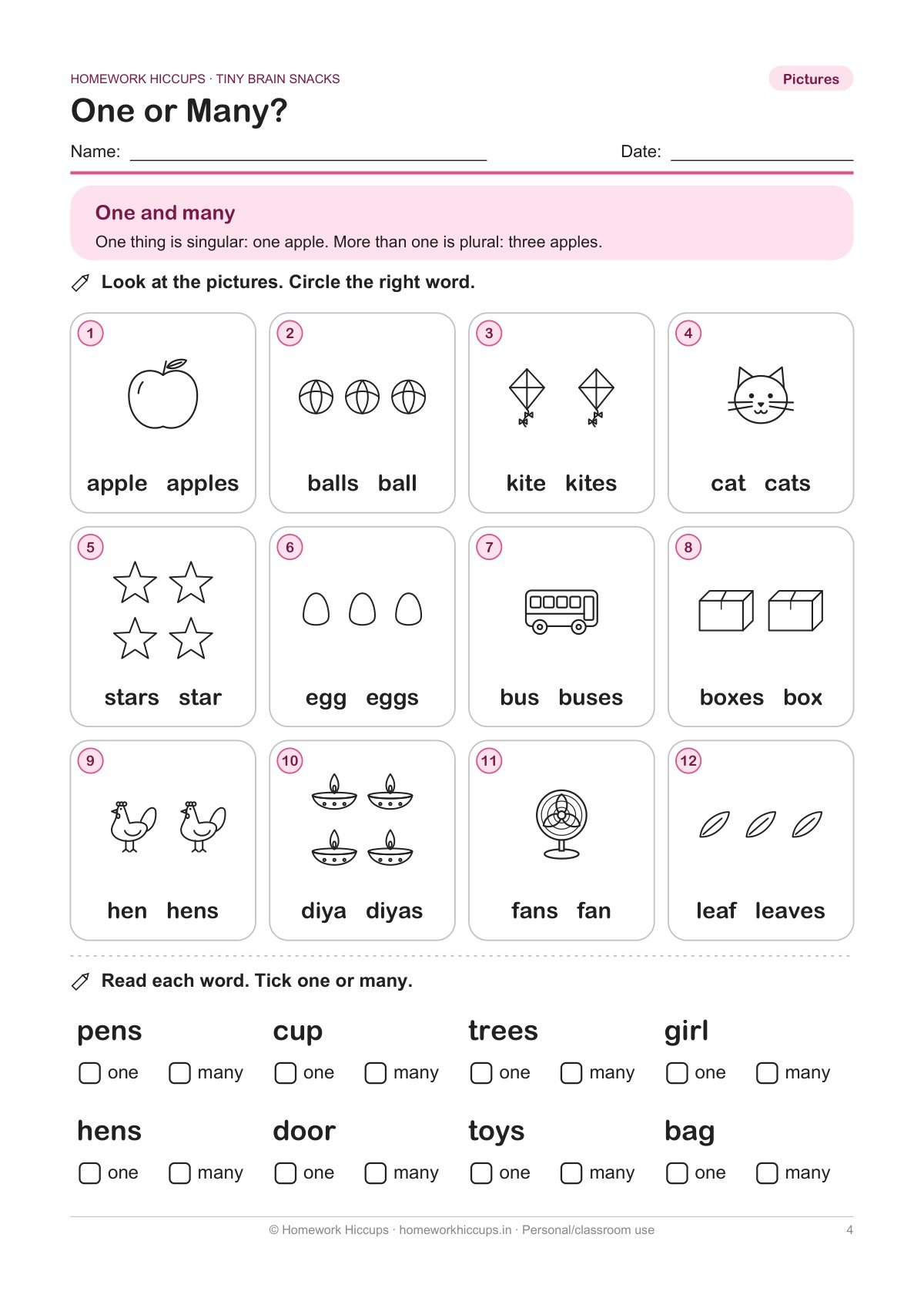
- Listening and speaking: rhymes, action songs, short picture stories, answering simple questions, saying their name.
- Pre-writing strokes: standing lines, sleeping lines, slanting lines, curves, zig-zags and circles. These are the building blocks of every letter.
- Letter awareness: many schools introduce capital letters A–Z through songs, pictures and tracing. Others wait until LKG for formal letter writing.
- Book handling: turning pages, looking at pictures, “reading” a story from pictures.
Nursery Maths syllabus
Nursery Maths is about noticing quantity, shape and pattern in everyday life.
- Rote counting (saying numbers in order), often 1–10, sometimes up to 20.
- Counting objects one by one and understanding “how many”.
- Recognising numbers 1–10; some schools introduce tracing.
- Colours: red, blue, yellow, green and more.
- Shapes: circle, square, triangle (sometimes rectangle).
- Comparisons: big/small, long/short, more/less, in/out.
- Matching and sorting by colour, size or shape.
Hindi and EVS in Nursery
Many schools teach Hindi or the regional language through rhymes and songs in Nursery. Some introduce a few swar (vowels) such as अ and आ, often through pictures (अ से अनार). Formal writing in Hindi usually begins in LKG or later, and this varies a lot by school.
EVS (the world around me) is taught orally through themes:
- Myself: name, body parts, feelings.
- My family and my home.
- Fruits and vegetables.
- Animals and birds, and the sounds they make.
- Good habits: washing hands, eating healthy food, sharing.
- Festivals and seasons.
Fine motor and social skills: the hidden syllabus
Ask any Nursery teacher and they will tell you the most important learning often does not appear on the report card. In Nursery, children are building:
- Hand strength and control: tearing paper, playing with dough, threading beads, using fat crayons.
- Independence: opening a tiffin box, putting on shoes, using the toilet, packing their bag.
- Social skills: waiting their turn, sharing, saying sorry and thank you.
- Attention: sitting for a short story or activity.
- Separation: feeling safe at school without a parent.
These skills make LKG much smoother. If you are wondering what comes next, our guide to the LKG syllabus explains the jump, and our post on the difference between LKG and UKG shows how the three preschool years connect.
Prefer ready-to-print pages?
Nursery Worksheets PDF for Ages 3–4 – Pre-Writing, Colours, Shapes, A–Z & 1–10 (46 Pages) – A4 PDF, instant download. ₹149 ₹299
Month-wise nursery plan (a typical example)
Schools plan their year differently, but many follow a pattern like this. Use it as a rough guide, not a target.
| Months (approx.) | Language | Numbers and concepts | Themes and skills |
|---|---|---|---|
| April–June | Rhymes, name, standing and sleeping lines | Colours red, blue, yellow; counting 1–3 | Settling in, myself, my school |
| July–September | Slanting lines, curves; letters A–E through pictures | Circle, square; counting 1–5; big/small | My family, body parts, fruits |
| October–December | Zig-zags, circles; letters F–M | Triangle; counting 1–7; matching | Animals, festivals, good habits |
| January–March | Letters N–Z; simple picture talk | Counting 1–10; sorting; more/less | Transport, helpers, seasons |
Nursery admission: what schools look for
Admission rules vary by state. Under the Right to Education Act, schools are not supposed to put children or parents through screening procedures when admitting a child, and some places, such as Delhi, use points-based systems for entry-level seats. Even so, many schools do have a short, friendly interaction. There is usually no “admission syllabus” to study. If a teacher does chat with your child, they are typically checking very basic things:
- Can the child say their name and respond to simple questions?
- Are they comfortable for a few minutes away from a parent?
- Can they follow a simple instruction like “Please give me the red block”?
- Toilet independence (some schools ask parents about this).
The best preparation is talking, reading picture books and playing together — not drilling answers. For older siblings preparing for LKG, our list of LKG GK questions gives ideas for gentle conversation practice.
How to support Nursery learning at home
Talk, read and sing every day
Describe what you are doing while cooking, read one picture book at bedtime, sing rhymes in the car. Language grows through conversation.
Build hand strength through play
Dough, clay, peg boards, tearing old newspapers, picking up rajma with fingers (always supervised, as small items can be a choking risk) — these prepare little hands for writing far better than early pencil work.
Keep any worksheet time short
If your child enjoys printed activities, five to ten minutes is plenty at this age. Stop while they are still having fun. Our guide to worksheets for 3 year olds explains what to use and what to avoid.
Follow your child’s pace
Some three-year-olds trace confidently; others are not interested yet. Both are normal. If you have specific concerns about speech, hearing, vision or motor skills, speak to the teacher and your paediatrician.
Nursery worksheets for ages 3–4
For families who want a gentle, structured option, our Nursery Worksheets PDF Starter Pack (Ages 3–4) has 46 A4 pages covering pre-writing lines, colours, shapes, A–Z, numbers 1–10, matching and sorting. It is ₹149, paid via UPI, and you can reprint pages for your own child as often as you like — useful for repeating favourite activities.
Get the Nursery Starter Pack – ₹149
You can browse all printables for this age in our Nursery worksheets category. For a fun break from tracing, the Colouring and Mazes Fun Pack (₹79) is a relaxed way to build pencil control.
Planning ahead for next year? See what LKG children practise in the LKG worksheets category.
🧸 Learning toys kids love
As an Amazon Associate, Homework Hiccups earns from qualifying purchases, at no extra cost to you.
Frequently asked questions about the nursery syllabus
Is there an official nursery syllabus in India?
No. There is no single official nursery syllabus. Each school or preschool designs its own programme. The National Curriculum Framework for Foundational Stage 2022 gives national guidance on learning goals for ages three to eight, and many schools use it as a reference.
What is taught in nursery class?
Most nursery programmes cover rhymes and stories, pre-writing lines, early letter awareness, counting to about 10, colours, shapes, comparisons, simple EVS themes like family and animals, and plenty of play to build fine motor and social skills.
Should a nursery child be able to write A to Z?
Not necessarily. Many schools introduce letters through songs and tracing in Nursery, but confident independent writing usually develops in LKG and UKG. At three, pre-writing lines and hand strength matter more.
What age is nursery in India?
Nursery children are usually around three to four years old. The exact age cut-off is set by your state and school, so check the admission notice for the year you are applying.
Is there a syllabus for nursery admission?
Usually not. Rules vary by state, and schools are not meant to screen young children for admission. If there is a short interaction, it typically checks comfort, communication and basic independence rather than academic knowledge.