A times tables test for kids does not have to mean pressure, tears or red marks. Used well, a short timed test is simply a way for your child to see their own progress: last week 18 right, this week 23. That feeling of beating their own score is what keeps them practising.
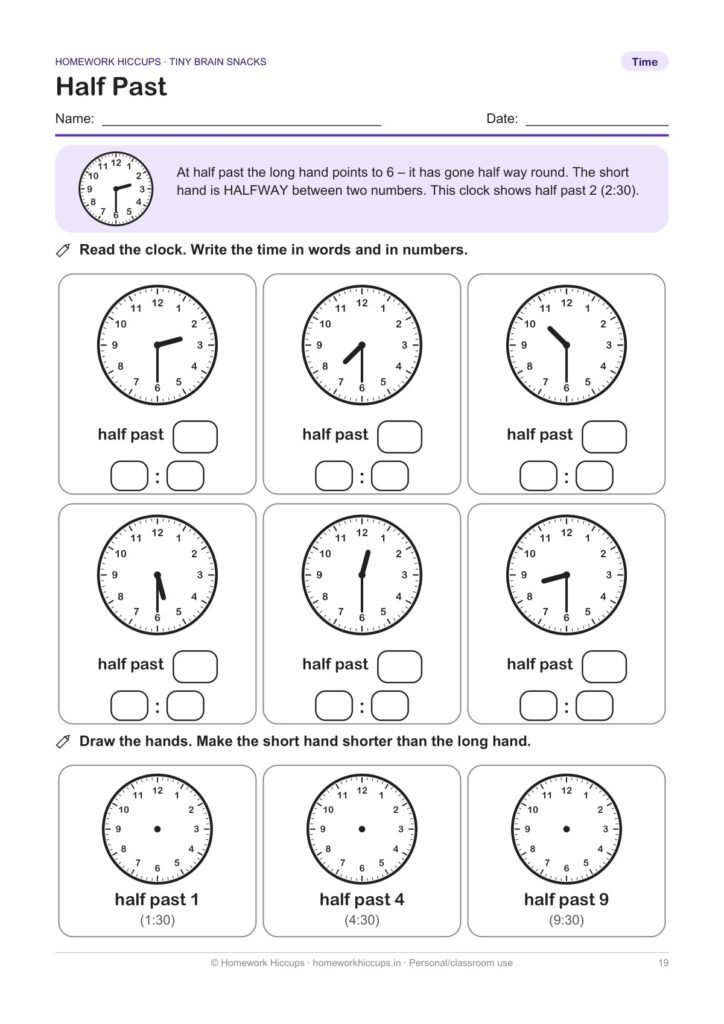
Print-ready worksheets for this topic
Times Tables, Time & Money Worksheets PDF – Tables 2–10, Clock, Calendar & Indian Rupees (41 Pages) – A4 PDF, instant download. ₹99 ₹199
Below are four ready-to-use tests of 30 facts each, from the easy tables to a mixed challenge, with answers. You will also find a simple “beat your own score” rule, a tracking table, and what to do about the facts a child keeps getting wrong. The tests suit Class 2 and Class 3, and confident Class 1 children can try Test 1.
🧰 Make practice more fun at home
 A4 printing paperBright 75–80 GSM sheets so worksheets print crisp.See on Amazon →
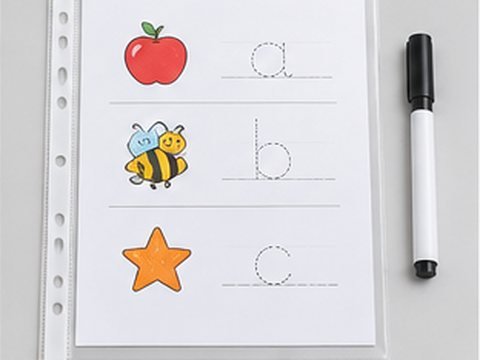 Wipe-clean sheet protectorsSlip a page in, write, wipe and reuse.See on Amazon →
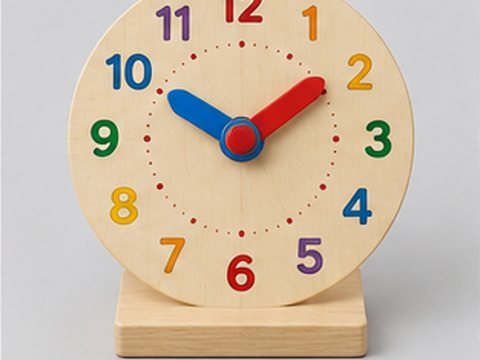 Learning clockMovable hands make telling time click.See on Amazon →
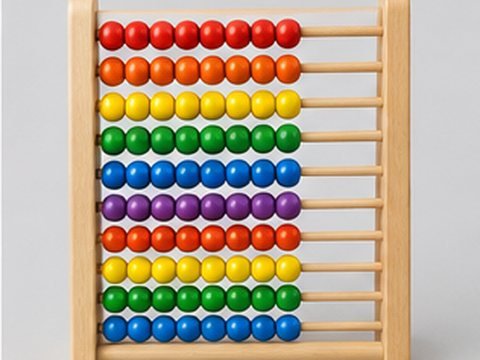 Abacus for kidsBead counting makes sums visible and fun.See on Amazon →
As an Amazon Associate, Homework Hiccups earns from qualifying purchases, at no extra cost to you.
Quick answer: To run a multiplication speed test without stress:
- Use 30 facts and a timer, but compete only with your own last score.
- Start with tables 2, 5 and 10, then 3 and 4, then 6 and 7, then mixed.
- Test once or twice a week, not every day; practise on the other days.
- Write down missed facts and practise just those, 3 at a time.
- Move on when your child gets 27 or more right on two tests in a row.
How to use this times tables test for kids
- Copy or write the test. Write the facts in a notebook in the same order, leaving space after each equals sign.
- Choose the time. Start with 5 minutes. As your child improves, try 4, then 3 minutes.
- Skip and come back. If a fact is hard, skip it and come back at the end. This stops one fact eating up the time.
- Check together. Use the answers below. Circle missed facts in a calm colour, not red.
- Record the score and time in the tracker.
The “beat your own score” rule
There is only one rule: you are racing yesterday’s you. No comparing with siblings or classmates. If the score goes up, celebrate. If it goes down, say “Tables have good days and bad days” and try again next time. Some facts appear twice in a test on purpose, often in the turned-around form (7 × 4 and 4 × 7), because children need to know both.
Test 1: tables 2, 5 and 10
The friendliest start: these tables follow clear patterns (even numbers, ending in 0 or 5, ending in 0).
| Test 1: tables 2, 5 and 10 (30 facts) | ||||
|---|---|---|---|---|
| 1. 10 × 2 = | 2. 2 × 6 = | 3. 5 × 6 = | 4. 10 × 10 = | 5. 2 × 8 = |
| 6. 9 × 10 = | 7. 10 × 2 = | 8. 1 × 2 = | 9. 5 × 4 = | 10. 2 × 9 = |
| 11. 8 × 10 = | 12. 10 × 3 = | 13. 10 × 7 = | 14. 5 × 5 = | 15. 10 × 4 = |
| 16. 5 × 10 = | 17. 10 × 5 = | 18. 7 × 2 = | 19. 5 × 7 = | 20. 10 × 6 = |
| 21. 5 × 9 = | 22. 5 × 2 = | 23. 2 × 4 = | 24. 8 × 5 = | 25. 2 × 3 = |
| 26. 2 × 2 = | 27. 1 × 10 = | 28. 5 × 3 = | 29. 2 × 5 = | 30. 5 × 1 = |
Answers: 1. 20, 2. 12, 3. 30, 4. 100, 5. 16, 6. 90, 7. 20, 8. 2, 9. 20, 10. 18, 11. 80, 12. 30, 13. 70, 14. 25, 15. 40, 16. 50, 17. 50, 18. 14, 19. 35, 20. 60, 21. 45, 22. 10, 23. 8, 24. 40, 25. 6, 26. 4, 27. 10, 28. 15, 29. 10, 30. 5
Test 2: tables 3 and 4
Tip: the 4 times table is the 2 times table doubled. 4 × 6 is double 2 × 6, so double 12 = 24.
| Test 2: tables 3 and 4 (30 facts) | ||||
|---|---|---|---|---|
| 1. 4 × 10 = | 2. 7 × 3 = | 3. 3 × 4 = | 4. 6 × 3 = | 5. 3 × 7 = |
| 6. 7 × 4 = | 7. 9 × 3 = | 8. 4 × 3 = | 9. 5 × 3 = | 10. 4 × 6 = |
| 11. 3 × 10 = | 12. 3 × 5 = | 13. 4 × 8 = | 14. 3 × 8 = | 15. 3 × 9 = |
| 16. 4 × 9 = | 17. 4 × 2 = | 18. 4 × 7 = | 19. 4 × 4 = | 20. 3 × 2 = |
| 21. 3 × 6 = | 22. 10 × 3 = | 23. 3 × 1 = | 24. 5 × 4 = | 25. 8 × 4 = |
| 26. 3 × 3 = | 27. 4 × 5 = | 28. 6 × 4 = | 29. 4 × 1 = | 30. 9 × 4 = |
Answers: 1. 40, 2. 21, 3. 12, 4. 18, 5. 21, 6. 28, 7. 27, 8. 12, 9. 15, 10. 24, 11. 30, 12. 15, 13. 32, 14. 24, 15. 27, 16. 36, 17. 8, 18. 28, 19. 16, 20. 6, 21. 18, 22. 30, 23. 3, 24. 20, 25. 32, 26. 9, 27. 20, 28. 24, 29. 4, 30. 36
Multiplication speed test 3: tables 6 and 7
These are the tables children find hardest. A useful trick: 6 × an even number ends in the same digit as that number (6 × 4 = 24, 6 × 8 = 48).
| Test 3: tables 6 and 7 (30 facts) | ||||
|---|---|---|---|---|
| 1. 6 × 7 = | 2. 6 × 1 = | 3. 10 × 6 = | 4. 8 × 7 = | 5. 5 × 7 = |
| 6. 6 × 6 = | 7. 7 × 7 = | 8. 9 × 7 = | 9. 6 × 7 = | 10. 6 × 9 = |
| 11. 6 × 2 = | 12. 6 × 8 = | 13. 7 × 4 = | 14. 6 × 3 = | 15. 7 × 2 = |
| 16. 6 × 5 = | 17. 8 × 6 = | 18. 6 × 10 = | 19. 7 × 6 = | 20. 7 × 3 = |
| 21. 10 × 7 = | 22. 6 × 4 = | 23. 6 × 6 = | 24. 7 × 6 = | 25. 7 × 10 = |
| 26. 7 × 8 = | 27. 7 × 7 = | 28. 7 × 1 = | 29. 7 × 5 = | 30. 7 × 9 = |
Answers: 1. 42, 2. 6, 3. 60, 4. 56, 5. 35, 6. 36, 7. 49, 8. 63, 9. 42, 10. 54, 11. 12, 12. 48, 13. 28, 14. 18, 15. 14, 16. 30, 17. 48, 18. 60, 19. 42, 20. 21, 21. 70, 22. 24, 23. 36, 24. 42, 25. 70, 26. 56, 27. 49, 28. 7, 29. 35, 30. 63
Get the Tables, Time and Money Pack – ₹99
Test 4: mixed tables 2 to 10
Use this as a tables test for Class 3 or as an end-of-term check once the single tables feel easy.
| Test 4: mixed tables 2 to 10 (30 facts) | ||||
|---|---|---|---|---|
| 1. 8 × 5 = | 2. 6 × 2 = | 3. 10 × 7 = | 4. 3 × 2 = | 5. 3 × 8 = |
| 6. 9 × 4 = | 7. 7 × 10 = | 8. 4 × 5 = | 9. 6 × 9 = | 10. 4 × 3 = |
| 11. 8 × 10 = | 12. 10 × 4 = | 13. 2 × 7 = | 14. 10 × 8 = | 15. 6 × 6 = |
| 16. 10 × 2 = | 17. 6 × 10 = | 18. 9 × 2 = | 19. 6 × 3 = | 20. 7 × 8 = |
| 21. 5 × 4 = | 22. 2 × 6 = | 23. 9 × 8 = | 24. 9 × 7 = | 25. 3 × 10 = |
| 26. 5 × 5 = | 27. 9 × 3 = | 28. 6 × 8 = | 29. 8 × 7 = | 30. 2 × 5 = |
Answers: 1. 40, 2. 12, 3. 70, 4. 6, 5. 24, 6. 36, 7. 70, 8. 20, 9. 54, 10. 12, 11. 80, 12. 40, 13. 14, 14. 80, 15. 36, 16. 20, 17. 60, 18. 18, 19. 18, 20. 56, 21. 20, 22. 12, 23. 72, 24. 63, 25. 30, 26. 25, 27. 27, 28. 48, 29. 56, 30. 10
Prefer ready-to-print pages?
Times Tables, Time & Money Worksheets PDF – Tables 2–10, Clock, Calendar & Indian Rupees (41 Pages) – A4 PDF, instant download. ₹99 ₹199
Tables quiz tracker
Copy this table into the back of a notebook. One row per test.
| Date | Test | Time allowed | Score (out of 30) | Facts to practise |
|---|---|---|---|---|
| Example | Test 3 | 5 min | 21 | 7 × 8, 6 × 9, 7 × 6 |
What to do with facts your child keeps missing
- Pick three, not ten. Write the three missed facts on a card. Practise only those for two or three days.
- Build from a known fact. If 7 × 8 is hard but 7 × 7 = 49 is known, add one more 7: 49 + 7 = 56.
- Turn it round. 8 × 3 may be harder than 3 × 8 = 24, but the answer is the same.
- Use the 9s finger trick. Hold up ten fingers and fold down the 4th for 9 × 4: three fingers on the left, six on the right, so 36.
- Go back to the chart. Let your child find the fact on a table chart, then cover it and say it. Our printable multiplication table chart has one to copy.
If your child is still learning the tables rather than testing them, start with how to learn multiplication tables first. For quick oral warm-ups that build number confidence, try our mental maths for Class 1 ideas.
Times tables practice test pack: printable pages with answer keys
If you would rather print than copy, our Times Tables, Time and Money Worksheets PDF (41 A4 pages, ages 6–9) has one page for each table from 2 to 10: trace the table, fill it in, skip count on a number line, and mixed practice with out-of-order facts and missing numbers. It adds a 1–10 multiplication grid to fill in and 3 times tables speed tests of 30 facts each, with time and score boxes. The same pack also covers telling the time (o’clock to 5-minute times, a daily routine timeline, calendar questions) and Indian money from ₹1 to ₹500 with kirana shopping and giving change. Four pages of answer keys cover every page with fixed answers, including all three speed tests.
You can try it first with the free multiplication tables worksheets sample: a cover, 3 real pages and a contents page, which you get by entering your name and email at checkout, with no payment.
Get the Tables, Time and Money Pack – ₹99
Browse more maths worksheets.
🧸 Learning toys kids love
 Maths board gamePractise numbers while playing as a family.See on Amazon →
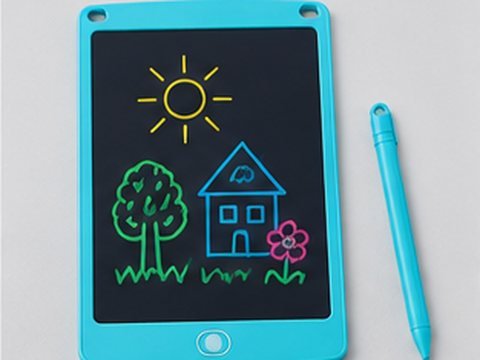 LCD writing tabletWrite, erase with one button, write again: no paper.See on Amazon →
 Jigsaw puzzles (3–6 yrs)Screen-free focus time for little ones.See on Amazon →
 Educational board gamesFamily game time that sneaks in learning.See on Amazon →
As an Amazon Associate, Homework Hiccups earns from qualifying purchases, at no extra cost to you.
Frequently asked questions
How many facts should a times tables test have?
Thirty facts is a good size for Class 2 and Class 3. It is long enough to show progress and short enough to finish in about 3 to 5 minutes.
How often should my child do a tables speed test?
Once or twice a week is plenty. On other days, practise the facts your child missed, chant tables aloud or play quick oral quizzes.
Which order should children learn tables in?
Many children find this order easiest: 2, 10 and 5 first, then 3 and 4, then 9, 6, 7 and 8. Each new table can be built from ones already known.
My child panics during timed tests. What should I do?
Remove the clock for a week and just count how many are correct. Then bring the timer back with a generous time, and compare only with your child’s own last score, never with other children.
What score means my child is ready for the next test?
A simple guide is 27 or more correct out of 30 on two tests in a row, within the time you set. Then move to the next test or reduce the time by a minute.