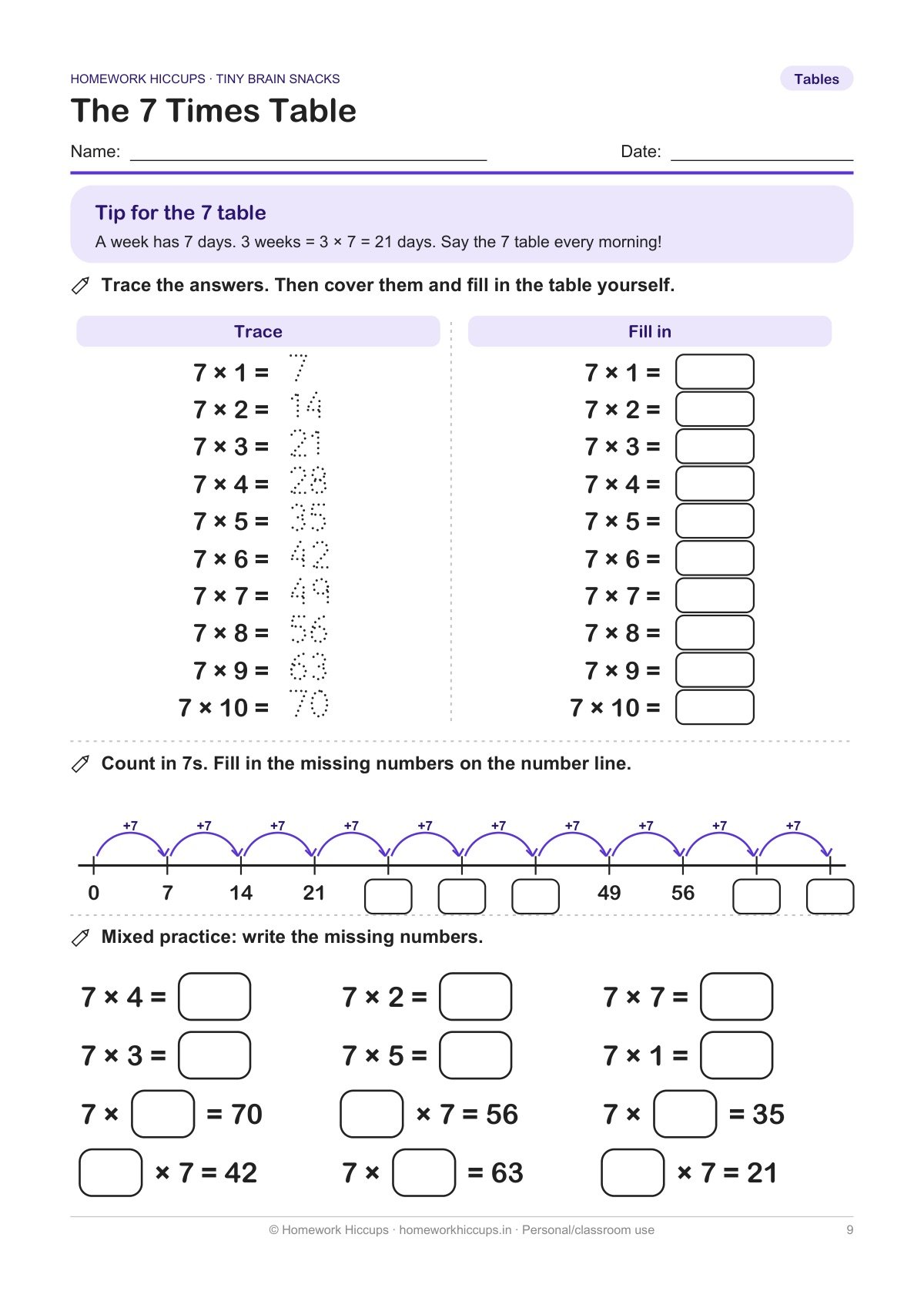
A good daily study routine for kids does not need to be long. For children in Nursery to Class 2, a short, predictable slot each day does far more than a stressful two-hour session the night before a test. The hard part for most parents is not the time; it is deciding what to do in those few minutes, and keeping it calm.
Print-ready worksheets for this topic
Complete Worksheet Library – All 20 Packs for Ages 3–8 (790+ Pages) – A4 PDF, instant download. ₹699 ₹2130
This guide gives you realistic practice times by age, a ready-made weekly timetable that rotates English, maths, Hindi and EVS, a simple way to choose worksheets, and tips for keeping practice peaceful. Treat the numbers as gentle guidance, not rules. You know your child best.
🧰 Make practice more fun at home
As an Amazon Associate, Homework Hiccups earns from qualifying purchases, at no extra cost to you.
Quick answer: A realistic home practice plan looks like this:
- Nursery (age 3–4): 5–10 minutes, mostly play-based.
- LKG and UKG (age 4–6): about 10–15 minutes.
- Class 1 and 2 (age 6–8): about 20–30 minutes, including school homework.
- Same time each day, one subject per day, stop while your child is still enjoying it.
How much should a 5 year old study?
This is one of the most common questions parents ask. For most five-year-olds, 10 to 15 minutes of focused table work a day is plenty, plus lots of learning through play, stories and talk. Young children’s attention is short, and that is normal. A child who does 10 happy minutes every day will usually progress faster than one who does 45 tearful minutes twice a week.
| Class | Typical age | Table work per day | What it can include |
|---|---|---|---|
| Nursery | 3–4 | 5–10 minutes | Colouring, pre-writing lines, counting objects, matching |
| LKG | 4–5 | 10 minutes | Letter and number tracing, shapes, patterns |
| UKG | 5–6 | 15 minutes | Phonics, CVC words, numbers to 50, simple sums |
| Class 1 | 6–7 | 20 minutes | Reading, spelling, addition and subtraction, Hindi matras |
| Class 2 | 7–8 | 25–30 minutes | Grammar, writing sentences, tables, Hindi reading |
These times include school homework. If the school has sent homework, do that first and keep extra practice very short or skip it that day. Reading aloud together at bedtime is extra, and it never needs to be counted as study.
Study timetable for Class 1: a 15-minute daily plan
Here is a simple daily study routine for kids in UKG and Class 1. Stretch each part by a few minutes for Class 2.
| Minutes | What to do | Example |
|---|---|---|
| 0–2 | Warm-up | Count to 50, say the days of the week, read 5 flashcards |
| 2–10 | Main worksheet (today’s subject) | One page: subtraction, a/an, a Hindi matra or EVS |
| 10–13 | Quick check together | Tick the right answers, redo one wrong answer |
| 13–15 | Fun finish | Colour the picture, a quick quiz or a sticker on the tracker |
Weekly home practice plan for kids
Rotating subjects keeps practice fresh and makes sure nothing gets forgotten. This plan works for UKG to Class 2. For Nursery and LKG, use the “early years” column.
| Day | UKG to Class 2 | Nursery and LKG (early years) |
|---|---|---|
| Monday | English: phonics, reading or grammar | Letter tracing and sounds |
| Tuesday | Maths: numbers, sums or tables | Counting objects, numbers 1–10 |
| Wednesday | Hindi: varnamala, matras or words | Hindi letters with pictures, or colouring |
| Thursday | EVS and GK: animals, body, seasons | Matching, sorting and colours |
| Friday | Weak spot day: redo what was hard this week | Shapes and patterns |
| Saturday | Fun page: maze, dot-to-dot, picture composition | Cut and paste or dot-to-dot |
| Sunday | Rest, or reading together only | Rest and stories |
Before a class test, swap the Friday slot to the test subject. Before a Hindi dictation, for example, practise the word list for a few minutes on Wednesday and Friday.
Daily routine for a Class 2 student
Class 2 children have more homework, more subjects and often an activity class or two. A daily routine that works for many families:
- After school: snack, play and rest for at least an hour. Tired children cannot focus.
- Early evening: school homework first (15–20 minutes).
- Then: one short practice page from the weekly plan (10 minutes).
- Before bed: 10 minutes of reading together, in English or Hindi.
For help with the homework part, see our guide on how to help your child with homework.
How to pick the right worksheet
The best worksheet is one your child can do mostly on their own, with one or two things that make them think. Use this quick test:
- Too easy: finished in a minute, no mistakes, child looks bored. Move on.
- Just right: a few mistakes, child can fix them with a hint, feels proud at the end.
- Too hard: many mistakes, tears or refusal. Go one step back for a week.
Follow your school’s order where you can. If the class is learning subtraction, practise subtraction at home that week. Our collection of printable homework worksheets for kids and free printable worksheets for kids can fill gaps.
Prefer ready-to-print pages?
Complete Worksheet Library – All 20 Packs for Ages 3–8 (790+ Pages) – A4 PDF, instant download. ₹699 ₹2130
Home practice plan for kids: keeping it calm
- Same time, same place. A fixed slot, such as after the evening snack, removes daily arguments.
- Give a two-minute warning. “In two minutes we will do our page.” Sudden switches from play cause tears.
- Use a timer. Children relax when they know exactly when practice ends.
- Praise the effort. “You kept trying on that hard sum” means more than “Good boy”.
- Fix, do not erase. Let your child correct a mistake next to it, so they see what changed.
- Stop on a good note. End while your child is still happy, even if the page is not finished.
- Use a tracker. A sticker for each day of practice turns the habit into a game.
- Skip a day without guilt. Weddings, festivals and illness happen. Just restart the next day.
- Balance with screen-free play. Board games, cooking and building blocks are learning too. See our list of activities for kids without screens.
Study schedule for kids: what a month looks like
It helps to see the bigger picture. If your child practises 15 minutes, five days a week, that is 75 minutes a week and about 5 hours a month. At one worksheet page per session, that is around 20 pages a month, which is enough to make real progress in every subject without pressure.
| Week | Focus |
|---|---|
| Week 1 | Find the level: try one page in each subject and note what is easy or hard |
| Week 2 | Follow the weekly plan; spend Friday on the hardest subject |
| Week 3 | Same plan; add 2 extra minutes of reading each day |
| Week 4 | Review week: redo 4 earlier pages and compare with the first try |
One download for the whole plan
The hardest part of a home practice plan is having the right page ready every day. Our Complete Worksheet Library Bundle brings together 20 original packs and 790+ printable pages, covering Nursery to Class 2 in one download: the Nursery, LKG and UKG starter packs, Class 1 and Class 2 maths and English, Hindi varnamala, matras and words, EVS and GK, tables, time and money, picture composition, opposites and rhyming words, colouring and mazes, dot-to-dot and cut-and-paste, and festival packs. Please note it does not include the six separate ₹49 topic packs, such as singular and plural or Hindi dictation.
Get the Complete Worksheet Library – ₹699
With one bundle, you can print Monday’s English page, Tuesday’s maths page and Wednesday’s Hindi page from the same folder, and reuse the earlier levels for a younger sibling. You can also browse all bundles or explore our blog for more parenting guides.
Download 20 Packs, 790+ Pages – ₹699
🧸 Learning toys kids love
As an Amazon Associate, Homework Hiccups earns from qualifying purchases, at no extra cost to you.
Frequently asked questions
How long should a 5 year old study each day?
For most 5-year-olds, about 10 to 15 minutes of focused table work a day is plenty, along with play, stories and conversation. This is a guide, not a rule.
What is a good study timetable for Class 1?
A good Class 1 timetable has about 20 minutes a day, including homework, with one subject per day: English, maths, Hindi, EVS, then a review day and a fun activity day.
Should I make my child study on weekends?
A short fun page on Saturday is fine, but many families keep Sunday for rest and reading together. Children learn better with a regular break.
What should I do if my child refuses to study?
Shorten the session, use a timer, choose an easier page and praise effort. Keep the same time each day so practice becomes a habit rather than a fight.
Is homework enough or should I add extra practice?
If homework already takes the full time for your child’s age, it is enough. Add a short extra page only on days without homework or before a test.