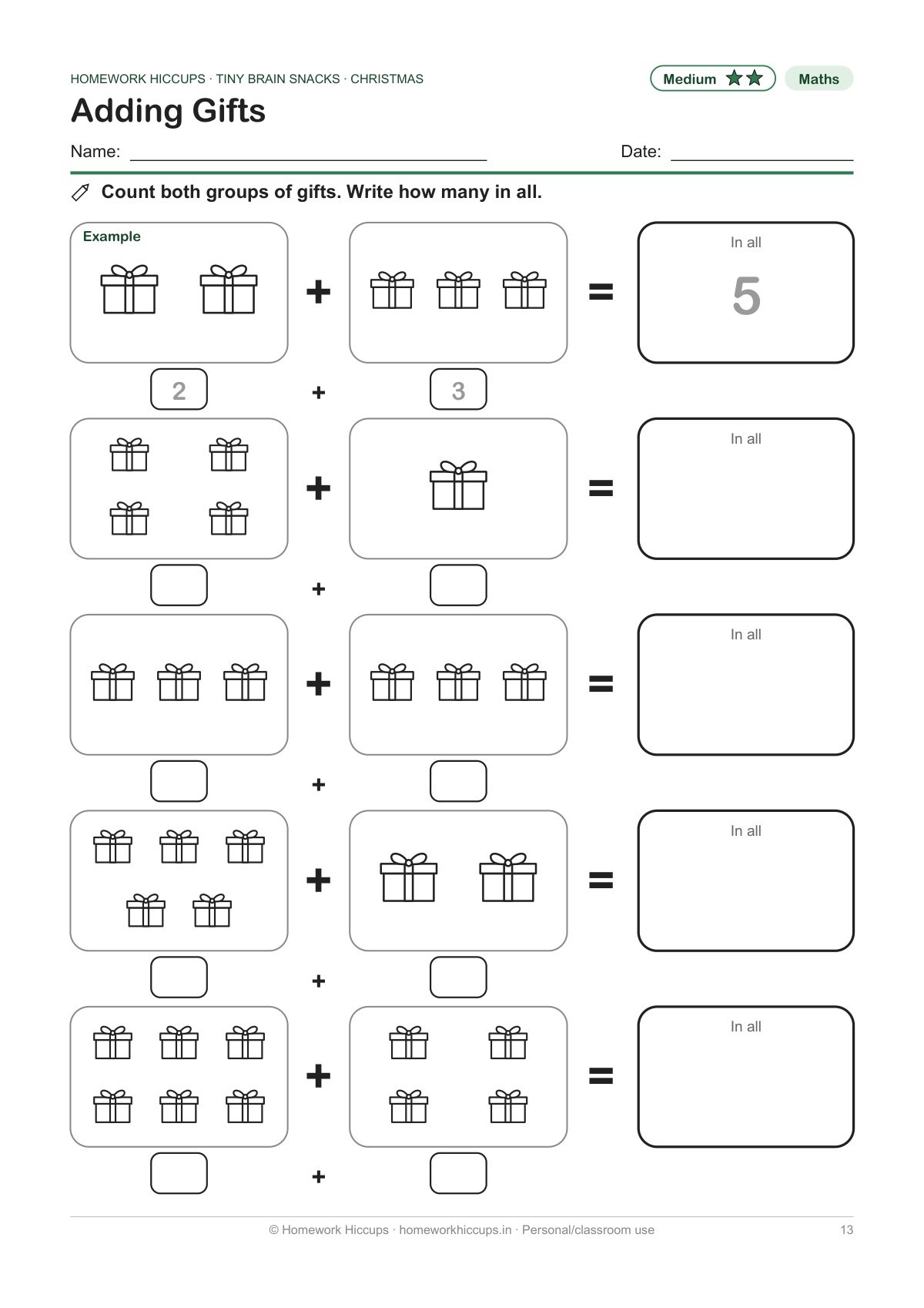
Picture sequencing worksheets ask a child to look at three or four pictures, decide what happened first, next and last, and number them in order. It sounds simple, but it is one of the most useful pre-writing skills for UKG to Class 2. A child who can put a story in order can later write a story in order, answer “what happened after that?” in a comprehension and explain the steps of a science activity.
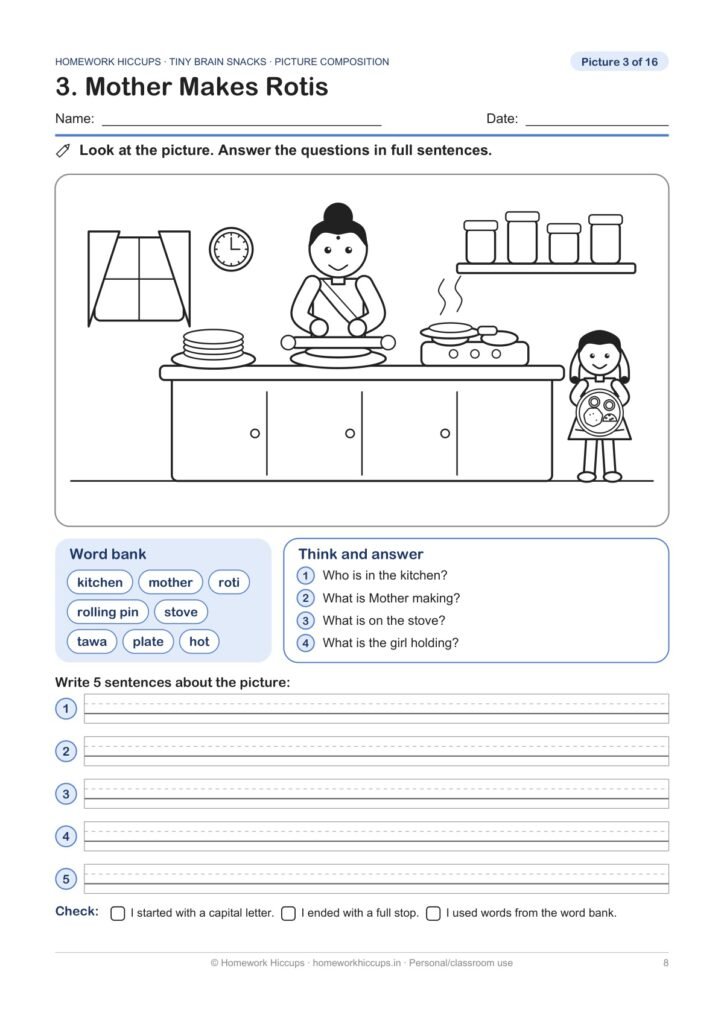
Print-ready worksheets for this topic
Picture Composition Worksheets PDF for Class 1–3 – 16 Scenes, Story Sequencing & Creative Writing (38 Pages) – A4 PDF, instant download. ₹79 ₹149
This guide explains the sequence words to teach, gives you eight ready-to-use picture story sequences (described in text so you can draw them or act them out), the correct order and a model sentence for each, and shows you how to make your own sequencing cards from an old comic or newspaper strip.
🧰 Make practice more fun at home
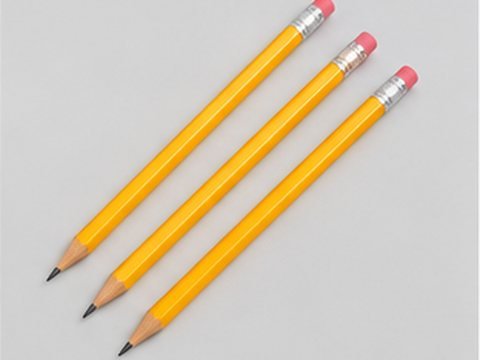 Triangle pencilsThe triangle shape guides a correct grip for tracing.See on Amazon →
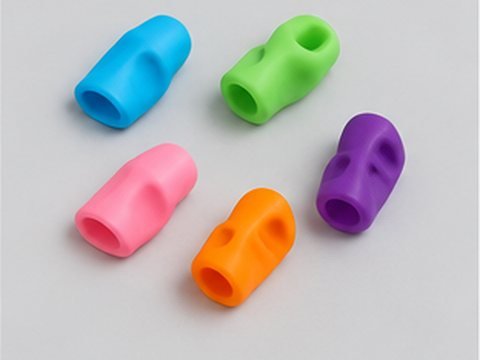 Pencil gripsSoft grips that help children hold the pencil right.See on Amazon →
 Abacus for kidsBead counting makes sums visible and fun.See on Amazon →
 Magnetic numbers boardBuild sums on the fridge or a magnetic board.See on Amazon →
As an Amazon Associate, Homework Hiccups earns from qualifying purchases, at no extra cost to you.
Quick answer: To teach picture sequencing to kids:
- Start with 3 pictures of a routine the child knows, such as brushing teeth.
- Teach four sequence words: first, next, then, last.
- Ask the child to number the pictures 1, 2, 3, 4, then say one sentence for each.
- Move to 4 pictures and written sentences in Class 1 and Class 2.
Why sequencing pictures for kids matters
Sequencing builds three skills at once. Children learn to observe small clues (the plant is taller, the ice-cream is smaller), to reason about cause and effect (you cannot drink chai before you pour it) and to speak or write in order. When children write picture composition or retell a story, the most common problem is jumping around in time. Sequencing practice fixes that early.
| Level | Number of pictures | What the child does |
|---|---|---|
| UKG | 3 | Arranges the pictures and tells the story aloud |
| Class 1 | 4 | Numbers the pictures and writes one short sentence for each |
| Class 2 | 4 to 5 | Writes a short paragraph using first, next, then, finally |
The sequence words: first, next, then, last
Write these four words on cards and keep them on the table during every activity.
- First – the very beginning.
- Next – what happens straight after.
- Then – what happens after that.
- Last (or finally) – the end of the story.
A quick oral game: describe your morning using only these four words. “First, I woke up. Next, I brushed my teeth. Then, I drank tea. Last, I went to work.” Then ask your child to do the same about their day.
8 picture story sequences with answers
For each story, the pictures are listed in a jumbled order, as they would appear on a worksheet (A, B, C, D). You can draw quick stick-figure pictures on cards, or simply read the descriptions and let the child arrange them. The correct order and a model sentence for each step follow.
1. Planting a seed
Jumbled: A – a small green shoot. B – a child pressing a seed into soil. C – a plant with a flower. D – a child watering the pot.
Correct order: B, D, A, C. First, Diya puts a seed in the soil. Next, she waters the pot. Then, a small shoot comes out. Last, the plant grows a flower.
Want to link this to science? Our parts of a plant for kids post fits well after this story.
2. Getting ready for school
Jumbled: A – a child putting on a school bag. B – a child waking up in bed. C – a child waving at the school gate. D – a child brushing teeth.
Correct order: B, D, A, C. First, Aarav wakes up. Next, he brushes his teeth. Then, he puts on his school bag. Last, he waves at the school gate.
3. Making chai
Jumbled: A – a grown-up pouring chai into cups. B – water boiling in a pan. C – a family drinking chai. D – adding tea leaves, milk and sugar to the pan.
Correct order: B, D, A, C. First, Dadi boils water in a pan. Next, she adds tea leaves, milk and sugar. Then, she pours the chai into cups. Last, the family drinks the chai together.
Use this one to remind children that the stove is only for grown-ups.
4. A melting ice-cream
Jumbled: A – a cone with half the ice-cream dripping. B – a full ice-cream cone in a child’s hand. C – an empty cone and a puddle on the ground. D – the ice-cream starting to drip in the sun.
Correct order: B, D, A, C. First, Riya gets a big ice-cream. Next, the sun makes it drip. Then, half of it melts. Last, there is only a puddle on the ground.
5. Washing hands
Jumbled: A – rubbing soapy hands. B – turning on the tap. C – drying hands on a towel. D – rinsing hands under the water.
Correct order: B, A, D, C. First, Kabir turns on the tap. Next, he rubs soap on his hands. Then, he rinses his hands. Last, he dries them on a towel.
6. Flying a kite
Jumbled: A – a kite high in the sky. B – a child buying a kite at a shop. C – a friend holding the kite while the child runs. D – a child tying the string to the kite.
Correct order: B, D, C, A. First, Meera buys a kite. Next, she ties the string. Then, her friend holds the kite and Meera runs. Last, the kite flies high in the sky.
7. A rainy day
Jumbled: A – a child jumping in puddles with an umbrella. B – dark clouds in the sky. C – a rainbow over wet roads. D – heavy rain falling.
Correct order: B, D, A, C. First, dark clouds come. Next, heavy rain falls. Then, the children jump in the puddles. Last, a rainbow comes out.
8. From egg to butterfly
Jumbled: A – a caterpillar eating a leaf. B – a butterfly flying. C – a tiny egg on a leaf. D – a pupa hanging from a twig.
Correct order: C, A, D, B. First, there is a tiny egg on a leaf. Next, a caterpillar comes out and eats leaves. Then, it becomes a pupa. Last, a butterfly comes out and flies away.
This one is a true life cycle, so there is only one correct order. For everyday stories like the kite, accept a sensible different order if the child can explain it.
How to make picture story sequence cards at home
- Take an old comic, a children’s magazine or a picture strip from a newspaper.
- Choose a strip with 3 or 4 boxes and a clear beginning and end.
- Cover any words with paper (otherwise the child just reads the order).
- Cut the boxes apart, mix them up and stick each one on a piece of card.
- Write the order on the back in pencil so the child can self-check.
- Store each story in its own envelope, labelled with a picture.
You can also photograph your child doing a real task, such as making a sandwich, print the photos small and use them as sequence cards. Children love sequencing a story about themselves.
Prefer ready-to-print pages?
Picture Composition Worksheets PDF for Class 1–3 – 16 Scenes, Story Sequencing & Creative Writing (38 Pages) – A4 PDF, instant download. ₹79 ₹149
From sequencing to sequence of events writing
Once your child can arrange pictures easily, add writing step by step:
- Step 1: Say one sentence per picture, starting with first, next, then, last.
- Step 2: Write the sentence starters, and the child finishes each one.
- Step 3: The child writes all four sentences alone.
- Step 4 (Class 2): Join the sentences into one paragraph and add a title.
That last step is exactly what picture composition asks for. See picture composition for Class 1 and picture composition for Class 2 for scenes and model answers. To practise reading a story and answering questions about its order, try our short stories for Class 1 with questions.
Print-ready picture sequencing worksheets
The Picture Composition Worksheets PDF (₹79, 38 A4 pages, Class 1 to 3) includes three picture-sequence stories – planting a seed, getting ready for school and making lemonade – where children number four pictures in order and write a sentence for each. Around them you get 16 picture composition scenes from everyday Indian life (kitchen, vegetable stall, railway station, kite flying and more), each with a word bank, four guiding questions and writing rows, plus three guided pages, a “describe the picture” page, three “finish the story” pages, sample answers, a writing tracker and a certificate.
Get the Picture Composition Worksheets – ₹79
You can try the style first with the free picture composition sample. More writing practice is in our English worksheets.
Common sequencing mistakes and quick fixes
- Guessing without looking. Ask, “What is different in this picture?” before the child decides.
- Starting in the middle. Always find the first and last pictures before the middle ones.
- Saying “and then” every time. Point to the four word cards and ask for a different word each time.
- Too many pictures too soon. If six pictures cause tears, go back to three.
Download the Picture Composition Pack – ₹79
🧸 Learning toys kids love
 Maths board gamePractise numbers while playing as a family.See on Amazon →
 Building blocksOpen-ended play that builds counting and creativity.See on Amazon →
 Jigsaw puzzles (3–6 yrs)Screen-free focus time for little ones.See on Amazon →
 Educational board gamesFamily game time that sneaks in learning.See on Amazon →
As an Amazon Associate, Homework Hiccups earns from qualifying purchases, at no extra cost to you.
Frequently asked questions
What are picture sequencing worksheets?
They show three to five jumbled pictures from one story or routine. The child numbers the pictures in the right order and then tells or writes a sentence for each one.
At what age can children do story sequencing?
Many children can order three pictures of a familiar routine by UKG. In Class 1 they can usually manage four pictures with a short sentence each, and in Class 2 a short paragraph.
Which words should children use for a sequence of events?
Teach first, next, then and last. In Class 2 add finally, after that and in the end so their writing sounds less repetitive.
Can a picture story sequence have more than one right answer?
Some can. A life cycle or a recipe has one order, but everyday stories may allow a sensible different order. Accept it if the child can explain why.
How do I arrange the pictures in order with a child who finds it hard?
Use only three pictures of something the child does every day, find the first and last together, then place the middle one. Act the steps out if needed.