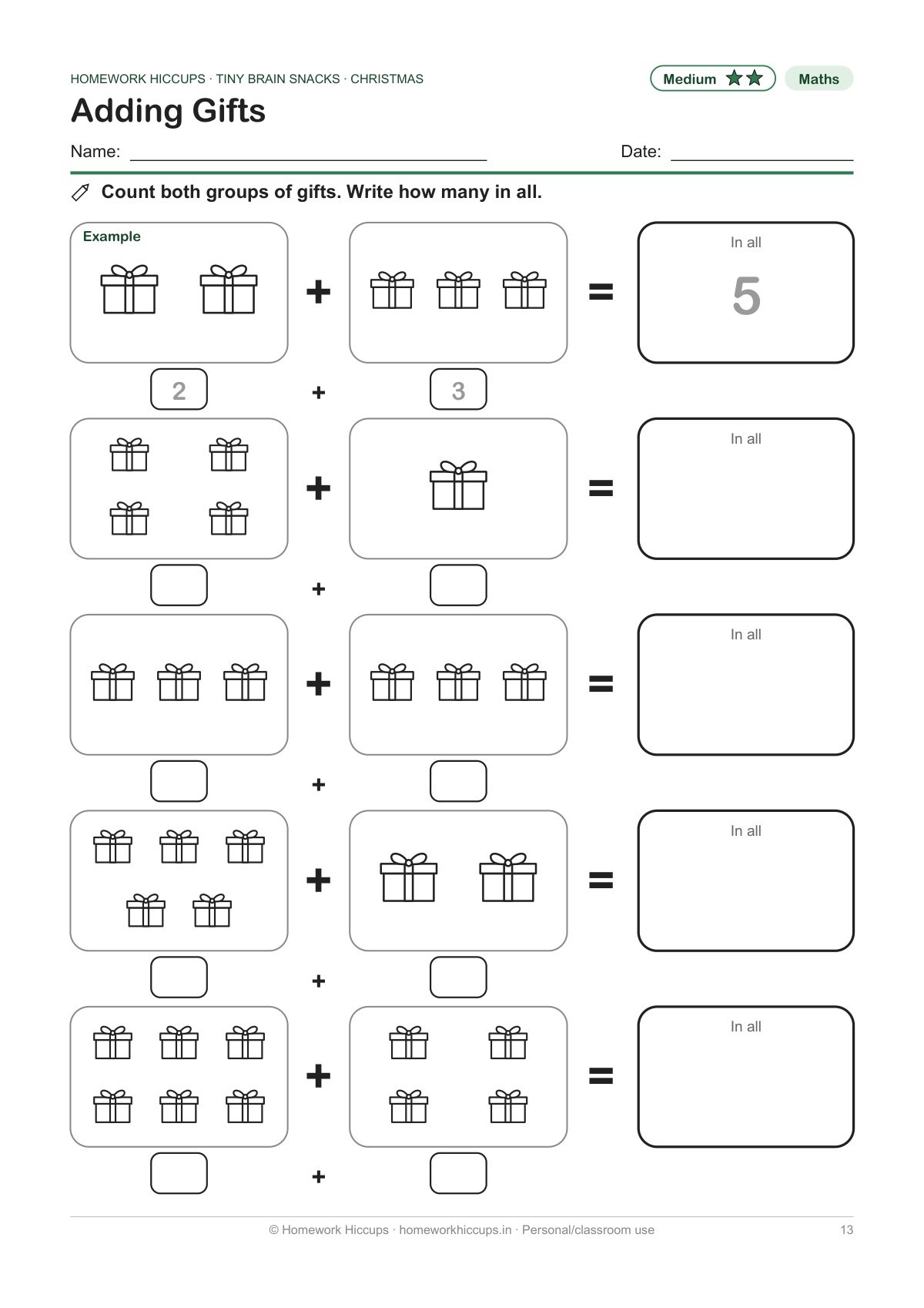
Contractions for kids sound like a big grammar word, but children use them all day long: I’m hungry, don’t touch that, it’s my turn. A contraction is simply two words squeezed into one, with an apostrophe standing in for the letters that went missing. Once children see that, the whole topic clicks.
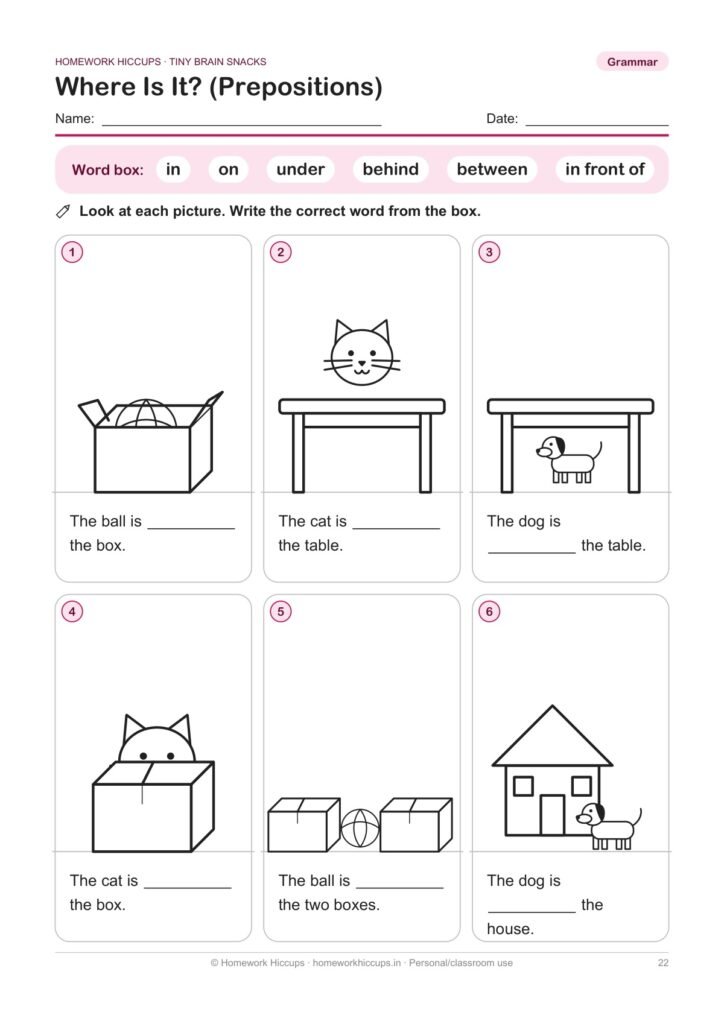
Print-ready worksheets for this topic
Class 2 English Worksheets PDF – Grammar, Phonics, Reading Comprehension & Writing (48 Pages) – A4 PDF, instant download. ₹149 ₹299
This guide gives you the one rule to teach, a chart of 33 common contractions sorted into families, the its and it’s trap, 20 practice questions both ways with answers, and a matching game you can make from scrap paper. It suits Class 2 and confident Class 1 readers.
🧰 Make practice more fun at home
 A4 printing paperBright 75–80 GSM sheets so worksheets print crisp.See on Amazon →
 Wipe-clean sheet protectorsSlip a page in, write, wipe and reuse.See on Amazon →
 Magnetic lettersBuild words on the fridge while dinner cooks.See on Amazon →
 Word building gameSpell and match words through play.See on Amazon →
As an Amazon Associate, Homework Hiccups earns from qualifying purchases, at no extra cost to you.
Quick answer: A contraction is a short form of two words.
- The apostrophe (‘) goes where letters are missing: do not → don’t (the o is missing).
- Common ones: I’m (I am), it’s (it is), don’t (do not), can’t (cannot), won’t (will not).
- its (no apostrophe) means belonging to it; it’s means it is.
Contractions for kids: the one rule to teach
Write “do not” on the board. Rub out the o in “not” and push the words together. Put a small comma-shape up high where the o used to be. That mark is an apostrophe, and you have made don’t.
Tell children: the apostrophe is a little flag that says “some letters were here”. It always sits up high, never on the line like a comma, and it goes exactly where the letters were taken out. A common mistake is writing “do’nt”; ask, “Which letter is missing?” The answer is the o, so the apostrophe goes between n and t.
Short forms in English for kids: where we use them
We use contractions when we talk and in friendly writing such as letters to friends, stories and speech bubbles. Some teachers prefer the full forms in formal answers, so follow your school’s guidance.
Contractions list: 33 common short forms
| Family | Long form → contraction |
|---|---|
| am, are, is | I am → I’m · you are → you’re · we are → we’re · they are → they’re · he is → he’s · she is → she’s · it is → it’s |
| have | I have → I’ve · we have → we’ve · you have → you’ve · they have → they’ve |
| will | I will → I’ll · you will → you’ll · we will → we’ll · she will → she’ll · he will → he’ll |
| do, did | do not → don’t · does not → doesn’t · did not → didn’t |
| special | cannot → can’t · will not → won’t |
| be + not | is not → isn’t · are not → aren’t · was not → wasn’t · were not → weren’t |
| have + not | have not → haven’t · has not → hasn’t |
| could, should, would | could not → couldn’t · should not → shouldn’t · would not → wouldn’t |
| others | let us → let’s · that is → that’s · there is → there’s |
Teach one family a day. The not families are the easiest pattern to spot: n’t always replaces “not”.
The two odd ones: won’t and can’t
Won’t means will not, but it does not look like “willn’t”. It is an old, special form, so children simply need to learn it. Can’t comes from “cannot”, which is usually written as one word.
Don’t and doesn’t for kids
Use doesn’t with he, she, it or one name: “Riya doesn’t like milk.” Use don’t with I, you, we, they or more than one person: “We don’t have a car.” If your child knows when to use is and are, this will feel familiar; see our is am are worksheet.
A small note on ‘s
Sometimes ‘s means “has” rather than “is”: “She’s gone home” means “She has gone home”. For Class 2, the “is” meaning is enough; mention “has” only if a child asks.
The its and it’s trap
This is the mistake even adults make. Teach a simple test: if you can say “it is” instead, use it’s. If you cannot, use its.
- it’s = it is: It’s raining.
- its = belonging to it: The cat licked its paw.
Try these (its or it’s?):
- The dog wagged ___ tail.
- ___ a sunny day.
- The bird built ___ nest.
- ___ time for lunch.
- I think ___ going to rain.
Answers: 1 its, 2 It’s, 3 its, 4 It’s, 5 it’s.
Words that sound the same but mean different things are called homophones. If its and it’s interest your child, our homophones for Class 2 post is the next step.
🧸 Learning toys kids love
 Story cubesRoll the cubes and tell a story together.See on Amazon →
 LCD writing tabletWrite, erase with one button, write again: no paper.See on Amazon →
 Jigsaw puzzles (3–6 yrs)Screen-free focus time for little ones.See on Amazon →
 Educational board gamesFamily game time that sneaks in learning.See on Amazon →
As an Amazon Associate, Homework Hiccups earns from qualifying purchases, at no extra cost to you.
Contractions worksheet for Class 2: 20 questions
Part A: write the contraction
- I am
- do not
- is not
- they are
- we will
- cannot
- it is
- will not
- let us
- have not
Part B: write the long form of each contraction
- She’s happy today.
- We aren’t late.
- He didn’t come to school.
- You’re my best friend.
- I’ve finished my lunch.
- They won’t stop talking.
- It’s raining outside.
- That’s my water bottle.
- Riya doesn’t like milk.
- We’ll go to the park tomorrow.
Ask your child to find the contraction in each sentence, say it aloud and write its two words.
Answers
| Part A | Part B |
|---|---|
| 1. I’m | 11. She is |
| 2. don’t | 12. are not |
| 3. isn’t | 13. did not |
| 4. they’re | 14. You are |
| 5. we’ll | 15. I have |
| 6. can’t | 16. will not |
| 7. it’s | 17. It is |
| 8. won’t | 18. That is |
| 9. let’s | 19. does not |
| 10. haven’t | 20. We will |
Prefer ready-to-print pages?
Class 2 English Worksheets PDF – Grammar, Phonics, Reading Comprehension & Writing (48 Pages) – A4 PDF, instant download. ₹149 ₹299
Apostrophe contractions game: match and snap
You need: 20 small paper cards. Write a long form on 10 cards (do not, I am, it is, will not, they are, we will, is not, let us, cannot, did not) and the matching contraction on the other 10.
- Memory match (2 players): lay all cards face down. Turn over two; if they match (do not and don’t), keep the pair and say a sentence using it.
- Snap: deal the cards out. Players turn cards over one at a time onto a pile; shout “Snap!” when a long form and its contraction appear together.
- Apostrophe hop (class): stick long forms on the floor. Call out a contraction; children hop to its long form.
- Speech bubble challenge: draw two stick people with speech bubbles. Children write a short conversation using at least three contractions.
Common mistakes to watch for
- Apostrophe in the wrong place: do’nt, is’nt. Fix: find the missing letter first.
- Missing apostrophe: dont, cant, Im. Fix: say “where is the flag?”
- Apostrophe for plurals: “two apple’s” is wrong; plurals just add s. Our punctuation worksheet for Class 2 covers this with other punctuation marks.
- its and it’s mixed up: use the “it is” test every time.
- lowercase i in I’m: I is always a capital, even in I’m, I’ve and I’ll.
For an overview of every Class 2 grammar topic, see our Class 2 English grammar worksheets guide.
Print-ready Class 2 grammar practice
Our Class 2 English Worksheets PDF (48 A4 pages) includes a page on synonyms, homophones (sun/son, see/sea, write/right and more) and contractions such as it’s, I’m and don’t, with a rule box at the top. The pack also covers long vowels, nouns and capital letters, plurals, pronouns, verbs, is/am/are, was/were, has/have, adjectives, prepositions, a/an/the, joining words, punctuation, five reading passages with five questions each, picture composition and paragraph writing, with five pages of answer keys.
Get the Class 2 English Worksheets – ₹149
Try the free Class 2 English worksheets sample first (5 pages, name and email at checkout). Need every subject? The Complete Worksheet Library Bundle (₹699) has 20 packs and 790+ pages.
Download the 48-Page Class 2 English Pack – ₹149
Frequently asked questions
What is a contraction for kids?
A contraction is two words joined into one shorter word, with an apostrophe in place of the missing letters. For example, do not becomes don’t and I am becomes I’m.
Where does the apostrophe go in a contraction?
The apostrophe goes exactly where the letters were taken out. In don’t, the o of not is missing, so the apostrophe sits between n and t.
What is the difference between its and it’s?
It’s means it is, as in it’s raining. Its means belonging to it, as in the cat licked its paw. If you can say it is in the sentence, use it’s.
Why is will not written as won’t?
Won’t is a special, old form of will not. It does not follow the usual pattern, so children simply learn it as a sight word.
In which class are contractions taught?
Many schools introduce contractions in Class 2, often alongside punctuation and the apostrophe, though the order of topics varies between books.