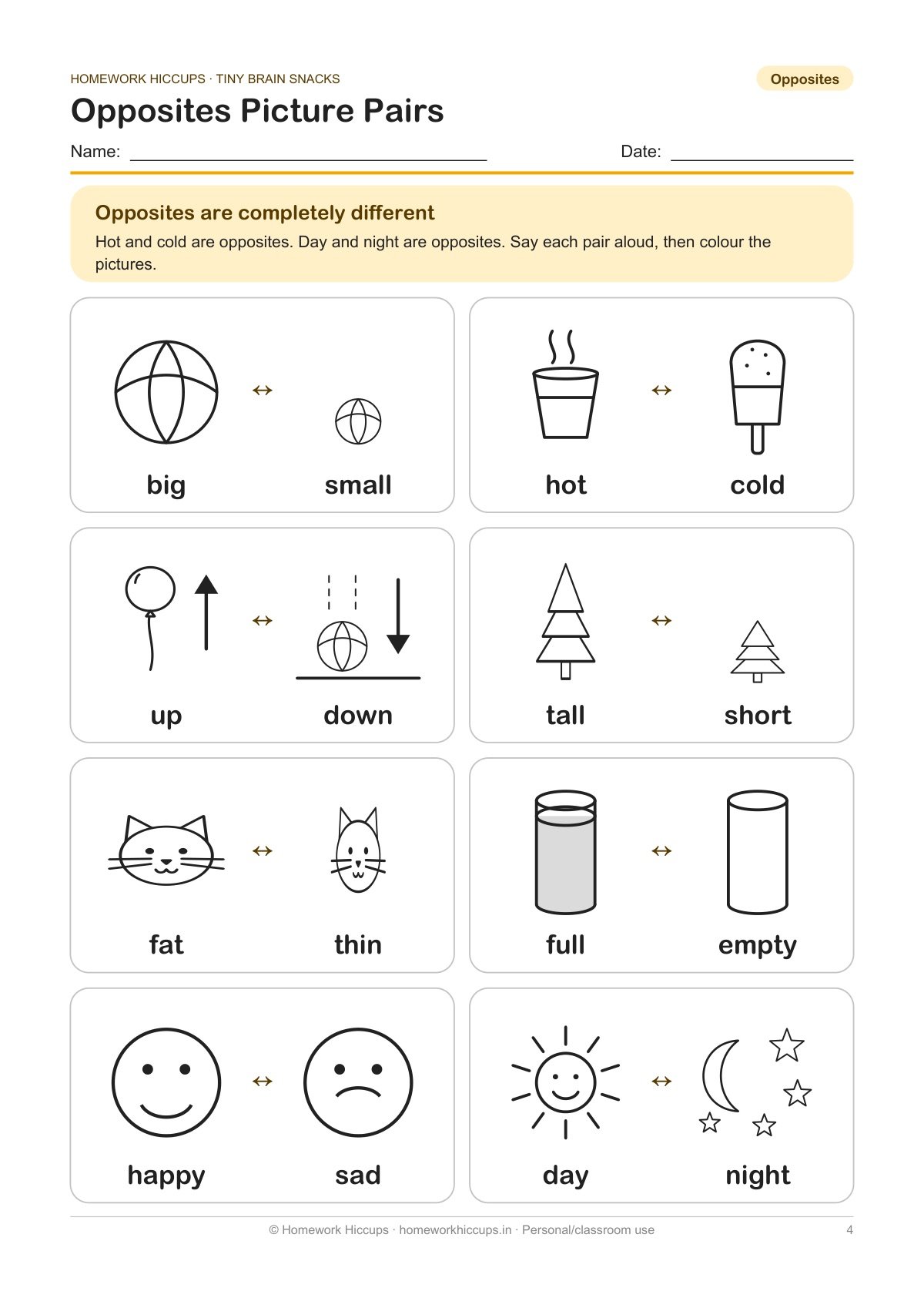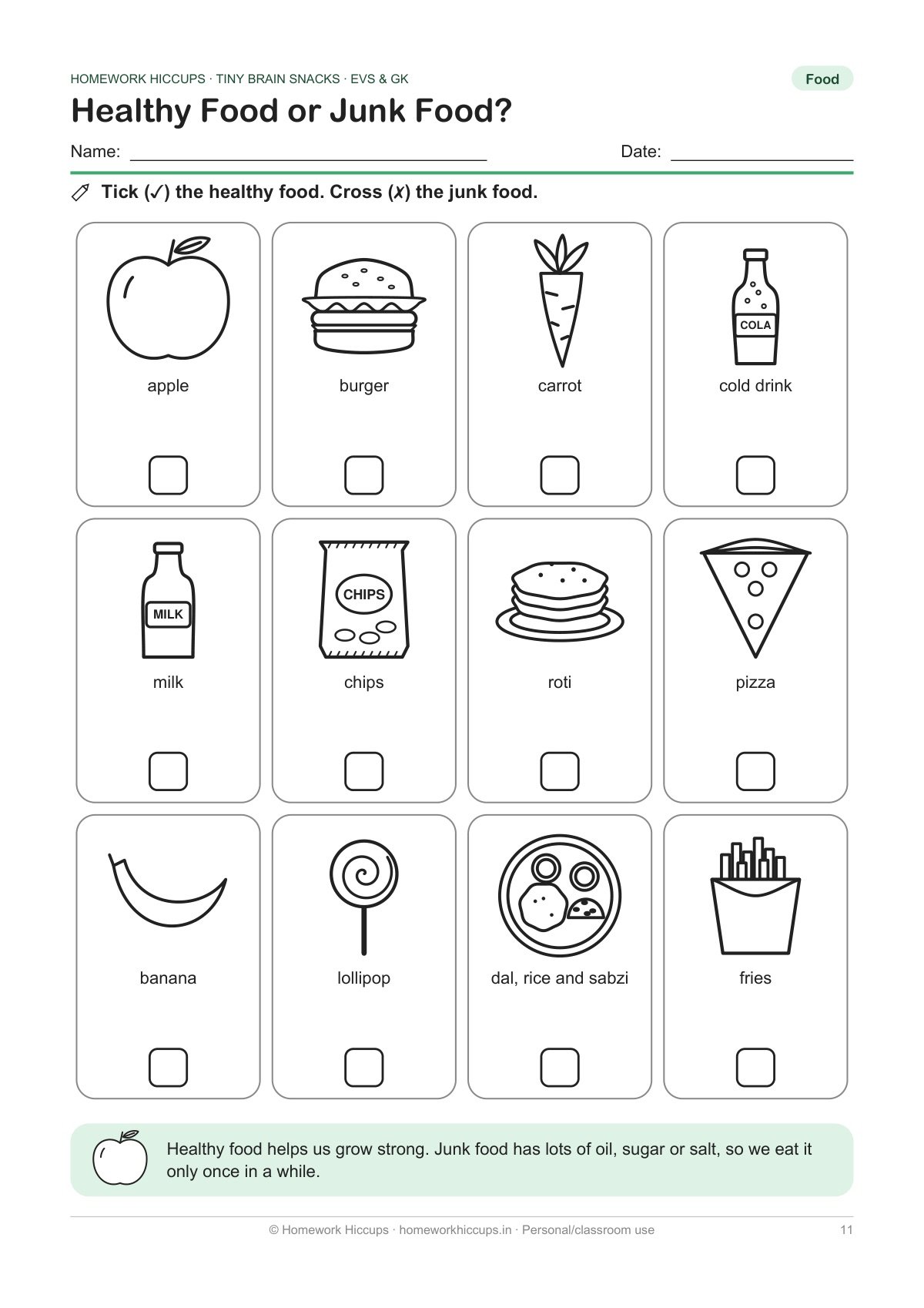
A colours worksheet for nursery works best as the last step, not the first. Three-year-olds learn red by holding a tomato, sorting red bangles and spotting a red bus, long before they colour an apple on paper. When the worksheet comes after those real experiences, it becomes a happy check rather than a confusing task.

Print-ready worksheets for this topic
Nursery Worksheets PDF for Ages 3–4 – Pre-Writing, Colours, Shapes, A–Z & 1–10 (46 Pages) – A4 PDF, instant download. ₹149 ₹299
This guide shows you how to teach colours to toddlers and nursery children one colour at a time, with a real-object list for six core colours, sorting games, a colour-hunt walk, simple colour names in Hindi, and gentle signs that might mean a child sees colours differently. Everything here can be done at home with things you already have.
🧰 Make practice more fun at home
As an Amazon Associate, Homework Hiccups earns from qualifying purchases, at no extra cost to you.
Quick answer: To teach colours to a 3-year-old:
- Teach one colour a week, starting with red, yellow and blue.
- Use real things first: fruits, vegetables, clothes, toys and bangles.
- Play sorting and hunting games every day for a few minutes.
- Add a worksheet at the end of the week: colour each picture its real colour.
- Be patient: many children only name colours reliably around age 3 to 4.
When do children learn colours?
Children usually match colours (put the red one with the red one) before they can point to a colour you name, and they can point before they can say the name themselves. So a child who cannot yet say blue may still be learning well. Check in this order:
| Stage | What you ask | What it shows |
|---|---|---|
| 1. Match | Find another one like this | Your child sees that colours are different |
| 2. Point | Show me the yellow one | Your child knows the word when they hear it |
| 3. Name | What colour is this? | Your child can say the colour word |
Most nursery children move through these stages at different speeds. Stay at a stage for as long as your child needs.
Colour names for kids: 6 core colours and real objects
Start with these six. Each has plenty of everyday Indian examples, so your child meets them again and again. Hindi names are given too, for families who speak Hindi at home.
| Colour | Hindi | Real things to show |
|---|---|---|
| Red | लाल (laal) | tomato, apple, red chilli, red bangles, a fire engine |
| Yellow | पीला (peela) | banana, lemon, turmeric (haldi), marigold flower, the sun in a drawing |
| Blue | नीला (neela) | the sky on a clear day, a blue bucket, a blue pen, a peacock’s neck |
| Green | हरा (hara) | leaves, peas, green chilli, coriander, a parrot |
| Orange | नारंगी (naarangi) | an orange, carrot, papaya, marigold flowers in orange |
| Purple | बैंगनी (baingani) | brinjal (baingan), purple grapes, jamun, purple cabbage |
Fun fact for parents: the Hindi word for purple, बैंगनी, comes from बैंगन, the brinjal. Children love that link. After these six, add pink, brown, black and white.
How to teach colours to toddlers: one colour a week
Here is a simple weekly rhythm you can repeat for each colour. It takes about 5 to 10 minutes a day.
- Day 1, meet the colour. Put three or four red things on a tray: a tomato, a red bangle, a red block, a red cloth. Say the word often: red tomato, red bangle. Let your child touch and hold them.
- Day 2, find it. Ask your child to bring you something red from the room. Help them if needed.
- Day 3, sort it. Mix red things with things of one very different colour (say, yellow). Your child puts red things in one bowl.
- Day 4, colour hunt. Go on a short walk and spot the colour: red scooters, red flowers, a red letterbox.
- Day 5, paper time. Colour a red apple and a red tomato with a red crayon, or dab red dots on a dot-art page.
- Weekend, mix and revise. Play a sorting game with this week’s colour and last week’s colour.
Teach red, yellow and blue first, because they look very different from each other. Leave orange and purple until later, since they sit between other colours and are easier to confuse.
Colour recognition activities for nursery
1. Bangle and block sorting
Put three bowls on the floor, each with a coloured paper inside. Give your child a mix of bangles, blocks or bottle caps to drop into the matching bowl. Sorting is also great fine-motor practice; for more ideas see our fine motor activities for preschoolers.
2. Colour hunt walk
Choose one colour before you step out. Count how many things of that colour you see on the way to the shop or park. Three-year-olds love calling out I found one!
3. Fruit and vegetable basket
While unpacking groceries, hold up each item and ask what colour it is. A banana, a carrot, a brinjal and a bunch of coriander give you four colours in one minute.
4. I spy with colours
Say: I spy something green. Your child looks around the room and guesses. Then let them choose the colour for you.
5. Colour of the day clothes
Many nursery classes have a colour day, such as Yellow Day. You can do this at home too: wear something of the week’s colour and talk about who else is wearing it.
6. Paint mixing (for older nursery children)
Put a blob of yellow and a blob of blue paint on a plate and let your child mix them with a finger. Watch green appear. Red and yellow make orange; red and blue make purple. This works best once the basic colours are secure.
Free practice list: what to say and ask each day
Copy this list onto a card and keep it on the fridge. Ask two or three questions a day while doing normal things.
- What colour is your cup?
- Show me something yellow in the kitchen.
- Can you find a green leaf?
- Which bangle is red?
- What colour is a banana?
- Bring me a blue toy.
- Is this tomato red or green?
- What colour is the sky today?
- Find two things that are the same colour.
- What colour is a carrot?
- Which crayon will you use for the grass?
- What colour is your favourite?
Prefer ready-to-print pages?
Nursery Worksheets PDF for Ages 3–4 – Pre-Writing, Colours, Shapes, A–Z & 1–10 (46 Pages) – A4 PDF, instant download. ₹149 ₹299
Colouring worksheet for nursery: making paper practice work
When your child is ready for paper, these tips make colouring calmer and more useful:
- Big, simple pictures with thick outlines suit 3-year-olds best: an apple, a sun, a leaf.
- Give only the crayon needed. For a page on red, hand over just the red crayon at first.
- Use chunky crayons that are easier for small hands to hold.
- Do not insist on staying inside the lines. Colouring near the picture is a good start at this age.
- Talk while colouring: Red apple. What else is red?
For more on what three-year-olds can do on paper, read our guide to worksheets for 3-year-olds. Colours are often taught alongside shapes, so our shapes worksheet for nursery guide makes a good next step.
Signs a child may see colours differently
Some children have colour vision deficiency, often called colour blindness. It is more common in boys, and it usually means certain colours, often reds and greens, look similar. Most children with it learn and play perfectly well. A few gentle signs to watch for, especially after age 4:
- Your child names most colours well but keeps mixing up red and green, or blue and purple, even after lots of practice.
- They colour leaves brown or red, or grass in unusual colours, again and again.
- They rely on light and dark rather than the colour itself to tell things apart.
None of these on their own means there is a problem; young children mix colours up all the time. If you notice a steady pattern, mention it calmly to your paediatrician or an eye doctor, who can do a simple check. Let your child’s teacher know as well, so colour-based tasks can be adapted.
Colours worksheet for nursery: the print-ready pack
The Nursery Worksheets PDF Starter Pack for ages 3 to 4 has 46 A4 pages. It includes 3 colour pages where children colour red, yellow, green, blue, orange and purple things their real colour (apple, tomato, banana, sun, leaf, peas, sky, water, orange, carrot, grapes and brinjal) and 2 dot art pages for crayons or dot markers. The rest of the pack covers pre-writing lines, shapes, big A to Z letters, numbers 1 to 10, matching and sorting, with a star tracker and certificate. It is black line art, so it prints well in black and white.
Get the Nursery Worksheets Starter Pack – ₹149
Want to see it first? The free nursery worksheets sample gives you a few real pages when you enter your name and email at checkout, with no payment. For a full picture of the year, see our nursery syllabus guide or browse nursery worksheets.
Download the 46-page Nursery Pack – ₹149
🧸 Learning toys kids love
As an Amazon Associate, Homework Hiccups earns from qualifying purchases, at no extra cost to you.
Frequently asked questions
At what age should a child know colours?
Many children start matching colours around age 2 and can name several colours between ages 3 and 4. Every child is different, so focus on steady practice rather than a fixed age.
Which colours should I teach first?
Start with red, yellow and blue, because they look very different from each other. Then add green, orange and purple, followed by pink, brown, black and white.
How do I teach colours to a 3-year-old at home?
Teach one colour a week using real objects, sorting games, colour hunts and simple colouring. Say the colour word often during normal routines like eating, dressing and shopping.
What are the colour names in Hindi for kids?
Red is लाल (laal), yellow is पीला (peela), blue is नीला (neela), green is हरा (hara), orange is नारंगी (naarangi) and purple is बैंगनी (baingani).
Should I worry if my child mixes up colours?
Mixing up colours is normal for young children. If a child over 4 keeps confusing the same colours, such as red and green, after lots of practice, mention it to your paediatrician or an eye doctor.